Introduction
For 400 years, Goan Christians walked past it and called it what it was.
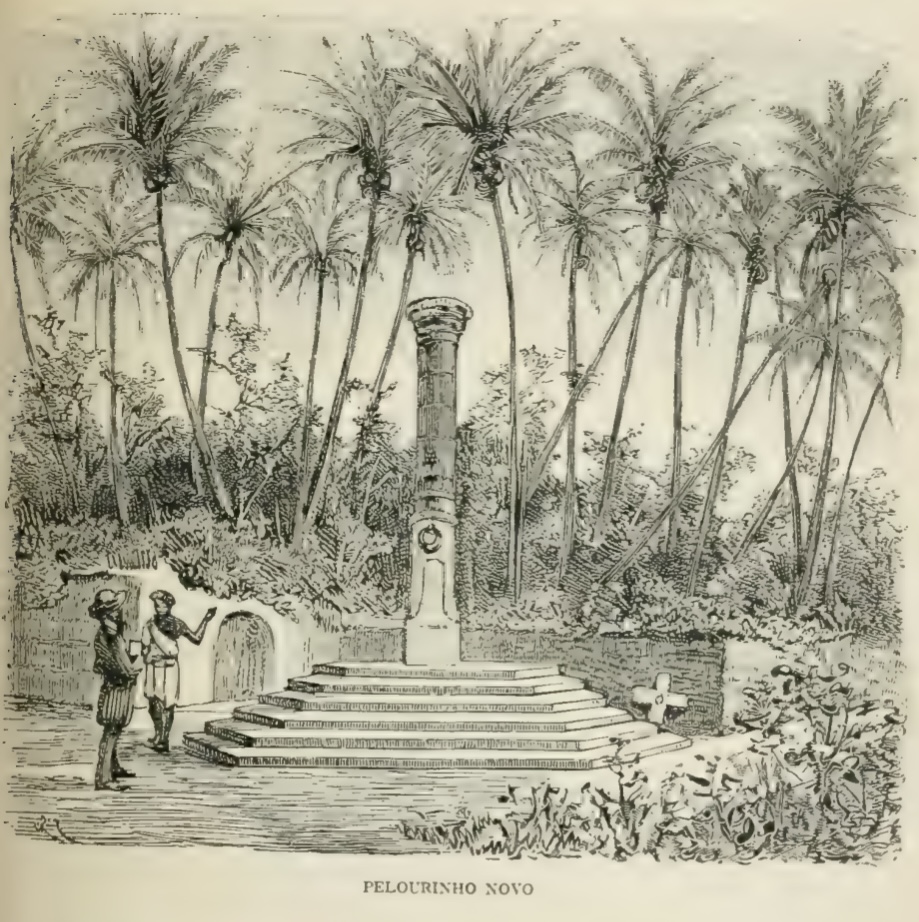
Pilorino Novo, the New Pillory. A black basalt pillar on a circular pedestal, near the Basilica of Bom Jesus, under what is now the flyover. Every child who grew up during the colonial times in Old Goa knew: this is where the câmara proclaimed decrees. This is where the city marked its municipal authority. It was not a gallows. It was a place of public shame, not of amputation. In the Portuguese world from Lisbon to Brazil to Mozambique, every city had its pilorinho. It was the sign that this place has law.
In 2026, the Goa Department of Archaeology proposed to protect it under a new name: Hath Katro Khamb, Hand-Cutting Pillar. The plaque still says Pelourinho Novo. The gazette now threatens to call it Hath Katro Khamb.
There is no document, no Inquisition processo, no Portuguese chronicle, no Jesuit or missionary letter that links this pillar to cutting hands for refusing conversion. The Goa Inquisition from 1560 to 1812 punished New Christians for heresy with penance, confiscation, imprisonment, and in grave cases, extreme punishment. It never codified hand amputation as a punishment for refusing baptism.
So why does a civic pillar need to become a hand-cutting pillar now? Anasemia answers: because a pillar is not being renamed. A phantom is being installed.
Part I: Anasemia – How History Makes a Crypt
For Nicolas Abraham and Maria Torok, a crypt is formed when a loss cannot be mourned in words. The loss is then swallowed whole, preserved alive inside the self, undead. The person becomes a cryptophore, a carrier of a dead that does not belong to him.
When applied to politics, the theory is precise: communities that cannot mourn a complex past invent a simpler past to carry inside them. They create neo-victims and neo-villains because real history is too messy to mourn.
Real Goan history is messy: Hindus and Catholics share ancestry, share surnames, share comunidade land, share a Konkani that was preserved in Romi by Catholics and Hindus. Portuguese rule was exploitative and also city-building. The Inquisition was real persecution and also not a hand-chopping machine. Old Goa died of epidemic and economic shift, not of religious terror.
That messiness must be mourned. It requires introjection, an empty mouth learning to say: we were both victims and collaborators, we were both tolerant and intolerant.
If a community refuses that mourning, it does incorporation. It swallows one pure victim and one pure villain whole (swallow the corpse ). And it needs a material object to house that crypt.
Pilorino Novo has become that object.
Part II: Three Anasemic Reversals in the Renaming
1. Pelourinho: From Pila to Phantom
Pelourinho comes from pila, pillar, a stake that makes law visible.
Anasemic reversal: to make law visible, you need a pillar. To make victimhood visible now, you need a wound on the pillar.
The renaming from Pelourinho Novo to Hath Katro Khamb performs that reversal. Pila becomes khamb but with a cut. The pillar is no longer where law was proclaimed. It becomes a site where hands were cut.
What is being cut here is not a historical hand. It is archival evidence. The new name cuts the document and keeps the rumor. The plaque says Pilorinho Novo. The gazette attempts to say Hath Katro Khamb. Two names on one body, the classic sign of a crypt. One dead, preserved inside the other, undead.
For Goan Christians, this is the moment of (Un)Homing. A heritage marker, in front of their Basilica where Goycho Saib lies, is made to say: your ancestors cut our ancestors’ hands here. Without evidence, their church square is turned into a courtroom where they stand always the accused.
They are told: prove you did not cut hands. The burden of proving a negative is placed on the living, to serve a phantom victim invented in the 21st century.
2. Hath Katro: The Incorporated Hand
Hath Katro – hand cut. Whose hand?
No Inquisition archive names a Hindu whose hand was cut at this pillar for refusing conversion. No family in Old Goa has an oral history: my great-grandfather’s hand was cut there. The hand is a phantom hand.
Abraham and Torok would say: this is the phantom limb of Hindutva history. The real loss that cannot be mourned is the loss of Old Goa itself , a great, cosmopolitan, Indo-Portuguese city that died not by Hindu-Muslim or Hindu-Christian war, but by disease, river siltation, and colonial economic stupidity. It was a city where Hindus traded, Christians prayed, Muslims administered. Its ruin is a shared loss.
That shared loss cannot be mourned by a politics that needs pure victims. So a pure wound is invented: a hand cut for refusing conversion. The hand is incorporated whole. Now the community can carry it as a moral claim: we suffered here.
But the hand that is carried belongs to no one. It is a neo-victim. A victim created now, to make the present grievance look ancient.
And every neo-victim needs a neo-villain. Who is the villain? Not Albuquerque’s soldiers in 1510, not the Adil Shahi regime which local historians say may have practiced amputation for debt, but the generic Goan Christian , the descendant of the convert who walks past the Basilica. He is made to carry the phantom guilt of a hand he never cut.
This is why Christians experience the renaming as aggression, not as heritage. The pillar of colonial times becomes a stone that accuses them without trial.
3. Novo: The Newness That Hides Oldness
Novo means new. Pilorinho Novo was new in relation to the old pillorinho of the city.
The new name Hath Katro Khamb claims to be old to reveal a imagined old horror. Anasemia says the opposite: it is new horror pretending to be old. It horror inflicted on the Christians
The narrative of hindu suffering is young , promoted by organisations seeking to paint the darkest chapter to produce a dark future. Through digital folklore it migrates to official history in 2026.
This is incorporation’s timeline: first you invent a victim on WhatsApp, then you put him in a gazette, then you say anyone who questions the gazette is defending colonialism.
The old Christians of Old Goa, who preserved that pillar when the city was jungle, who cleaned the weeds around it, who told their children “this is our municipal history,” are now told they are colonial defenders if they say: please show me the document.
Part III: Why Taking the Side of Christians Is Taking the Side of History
Taking the side of Christians here is not taking the side of Portuguese colonialism.
Goan Christians are not Portuguese. They are Goans whose ancestors became Christian, often under pressure of Ganvkaria and often by conviction, these reasons are those that historians still debate. They never cut hands at that pillar. Their church never taught hand amputation as conversion method.
To defend Pilorinho Novo is to defend three things that Christianity brings to history:
a. Documentary method over myth: The Church kept archives. The Inquisition kept processos. The Jesuits wrote letters. That archive is embarrassing ..it shows real persecution but it does not show hand-cutting at this pillar. Christian historiography says: if it happened, show the paper. Myth-making says: feeling is evidence.
b. Shared city over pure city: Pilorinho Novo as civic marker reminds us Old Goa was a city, not a temple or church alone. It had a câmara, a senate, a market, a port. Renaming it Hath Katro Khamb turns a shared civic ruin into a communal wound.
c. Introjection over incorporation: Christianity in Goa has learned painfully to introject its past. We have said: we accept colonizers did wrong. We are sorry for Inquisition excesses. We suffered under it more than anyone .We are learning to mourn difficult past. What we cannot do is incorporate a crime, we did not commit. We cannot feed a politics that needs us as perpetual villains.
Conclusion: How to Open the Crypt
Abraham and Torok say a crypt opens when the unspeakable is spoken.
What must be spoken in Old Goa is this:
This pillar never cut a hand. But history did cut Goa’s shared memory. Let us mourn that cut, not invent it. Let’s mourn the comming cuts of the future
Let the plaque remain Pilouinho Novo. No archival evidence links it to hand amputation for refusal of conversion. The history of the Inquisition and its real victims deserves honest research, not folklore.
That would be introjection: an empty mouth that finally says what was lost – a cosmopolitan city and stops carrying a phantom hand inside a real pillar.
Until then, the Pilorino Novo will remain what Goan Christians experience it as today: not a protected monument, but a Hat Katro Kabo, a hand cut off from their own body of history and held up to accuse them.
This is not heritage. It is the politics of invented victims and invented villains. And honest history, whether Hindu or Christian, must refuse it.