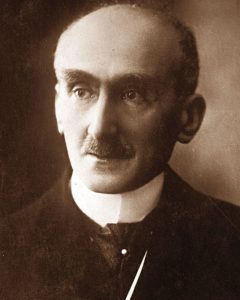
Humour is deeply human, intellectual, and profoundly social. It arises not merely from clever wordplay or slapstick accidents, but from a unique perception of life itself. According to the French philosopher Henri Bergson, comedy emerges when we witness life transforming into something mechanical, rigid, or object-like. Where life should flow with vitality, adaptability, and grace, the comic appears in moments of repetition, absent-mindedness, stagnation, and inelasticity. We laugh when the living becomes machine-like. This insight offers a powerful lens to understand the rich tradition of humour in Goan culture, especially in Konkani literature and the vibrant folk theatre form known as tiatr.
Bergson argues that laughter is a social corrective. It highlights deviations from the supple, evolving nature of human existence. A classic example is the absent-minded man who walks carelessly and suddenly stumbles. We do not laugh at the physical pain but at the momentary triumph of matter over spirit, the body behaving like an unresponsive object rather than a conscious, graceful being. Similarly, repetition strikes us as comic because it mimics the predictable cycles of a machine. Someone repeatedly touching their nose or adjusting their shirt in the same gesture, like a tic, becomes funny through mechanical imitation. Caricature works by exaggerating a single feature of the face or personality, freezing the individual into a rigid mask. Comic characters are often unaware of their own ridiculousness, operating on autopilot while life demands awareness and flexibility.
In Goan culture, these principles manifest vividly. Goa’s history of Portuguese colonial influence, Catholic traditions, migration to distant cities and countries, and tight-knit village communities has created fertile ground for Bergsonian comedy. Humour here frequently exposes the mechanical side of human behaviour where rigid social roles, repetitive habits shaped by migration and bureaucracy, and absent-minded adherence to outdated customs turning everyday life into a source of affectionate ridicule.
Nowhere is this more evident than in tiatr , Goa’s iconic musical theatre. Tiatr performances blend drama, song, and comedy, often featuring stock characters whose rigid personalities drive the laughter. Consider the classic bumbling husband who, despite repeated scoldings from his wife, continues the same careless mistakes forgetting errands, repeating excuses, or stumbling through household chores. The audience bursts into laughter not because of the scolding itself, but because the man has become a repetitive mechanism, lacking the adaptability that life requires. His absent-mindedness transforms him into an object of comic scrutiny, much like Bergson’s stumbling pedestrian. The exaggeration of his laziness or forgetfulness creates a caricature that everyone recognizes from their own families.
Satirical kantaram (songs) in tiatr take this further. A politician delivering the same empty promises election after election is the epitome of mechanical repetition. The singer mimics his gestures and phrases in exaggerated loops, highlighting the stagnation where fresh, living political engagement should grow. Viewers laugh because the politician appears as a wind-up toy, unaware of how ridiculous his predictability has become. This aligns perfectly with Bergson’s idea that comedy mechanizes the individual, allowing society to stereotype and gently correct such behaviour. The corrupt official, the nosy neighbour, or the returned migrant showing off foreign habits while clinging to village superstitions all become comic through their inelasticity.
The social dimension is crucial. Bergson notes that laughter requires a certain detachment. In the crowded, festive atmosphere of a tiatr performance, audiences share in the recognition of these mechanical traits without personal threat. The comic figure is externalized on stage, his or her ridiculousness spotlighted for collective enjoyment. Yet this laughter carries a therapeutic edge. By mocking rigid social norms such as dowry demands, generational clashes, or bureaucratic red tape by which Goan communities release tensions built from real-life frustrations. At the same time, Bergson warns that laughter can ridicule and even wound. When tiatr humour targets specific groups or individuals too harshly, it risks crossing from gentle correction into cruelty, reminding creators of the fine line between social commentary and harm.
Konkani literature extends these Bergsonian elements into written form. Early satirical works often portrayed Goans navigating dual identities under colonial and post-colonial influences. A character who meticulously copies Western manners in Mumbai while rigidly following outdated Konkani customs at home becomes a living caricature. The exaggeration of this split personality repeating the same contradictory behaviours turns life into mechanism. Readers laugh at the absent-minded inability to adapt fluidly to changing circumstances. The humour lies in the character’s unawareness: he believes himself sophisticated, yet the audience sees the mechanical repetition of cultural contradictions.
In short stories and plays by later Konkani writers, bureaucratic absurdities provide rich material. An illiterate villager in a courtroom repeating legal phrases he barely understands, taking figurative language literally, creates classic Bergsonian comedy. The violation of expected grace and intelligence is not malicious but mechanical the man functions like a faulty recording device. Family farces involving mistaken identities or repetitive misunderstandings similarly mechanize relationships. A mother-in-law who endlessly repeats the same complaints about her daughter-in-law, or a young man whose romantic gestures become predictable routines, embodies the shift from living growth to stagnant repetition. These narratives celebrate the vitality of Goan life by contrasting it with its comic failures.
Linguistic humour in Konkani culture also fits Bergson’s framework beautifully. Code-switching between Konkani, English, and Portuguese often leads to comic slips. A character attempting formal speech but falling back into the same colloquial phrases repeatedly highlights absent-mindedness. The language itself becomes a machine that the speaker cannot fully control, producing laughter through the gap between intention and mechanical execution. Caricatures in folk tales or modern skits exaggerate physical traits or mannerismsl ike the shuffling walk of an elder, the exaggerated gestures of a storyteller freezing them into comic masks.
Migration, a defining experience for many Goan families, adds another layer. The “Bombay Goan” who returns home speaking with an affected accent and repeating urban stories without adapting to village realities is a stock comic figure. His behaviour is rigid where life demands supple adjustment. Bergson would see this as life exhibiting stagnation instead of organic growth. The laughter that follows is social: it gently urges adaptability while bonding the community through shared recognition.
Importantly, Goan humour retains an underlying affection. While Bergson emphasizes the corrective function of laughter, in Konkani expressions it often feels warm and inclusive. The comic character is one of us family, neighbour, or fellow Goan whose mechanical failings mirror universal human tendencies. This prevents the ridicule from becoming purely destructive. Laughter becomes therapeutic, helping communities process the rigidities imposed by history, economy, and tradition.
In contemporary Goa, these patterns persist across digital skits, amateur theatre, and literature. Short videos mimicking politicians or family elders replay Bergsonian repetition for new audiences. The enduring appeal lies in the theory’s core insight: we laugh when the living spirit freezes into mechanical form. Goan humour, through tiatr and writing, continues to expose these moments, celebrating life’s grace by highlighting its comic opposites.
Henri Bergson’s philosophy thus reveals the deeper logic behind Goan laughter. It is not random jesting but a sophisticated cultural response to the tensions between vitality and rigidity. In the halls where tiatr unfolds or in the pages of Konkani stories, audiences find joy in the mechanical, the repetitive, and the absent-minded. This humour humanizes, corrects, and unites thus reminding us that even in our most ridiculous states, we remain connected through the shared, therapeutic act of laughter.