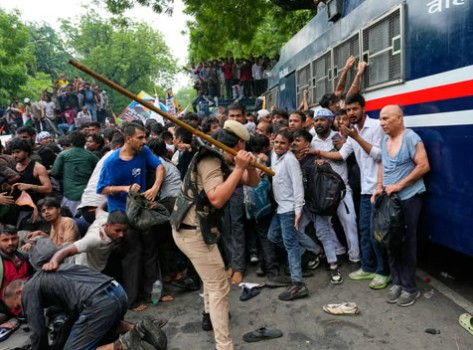
On July 20, 2026, central Delhi witnessed significant unrest as thousands of students, parents, teachers, and citizens took to the streets in protest. Organized under groups like the Cockroach Janta Party, the demonstration focused on alleged paper leaks in exams such as NEET-UG, systemic failures in the education sector, and demands for accountability including the resignation of the Education Minister. As protesters attempted to march toward Parliament during the monsoon session, clashes erupted with Delhi Police. Scenes of baton charges, tear gas deployment, water cannons, and mass detentions unfolded across areas like Jantar Mantar, Connaught Place, and nearby routes. This event has intensified debates over police brutality and what it indicates about the priorities and style of the Modi government.
The buildup to July 20 stemmed from weeks of simmering anger at Jantar Mantar. Participants expressed deep frustration over repeated exam scandals that threaten the careers and dreams of countless young Indians. When the march moved forward despite restrictions, police who had deployed thousands of officers and set up barricades intervened forcefully. Protesters reported being beaten while trying to advance peacefully, with tear gas causing panic, respiratory issues, and chaos in crowded spots. Accounts from the ground described aggressive lathi charges affecting students, including women and younger participants, along with arbitrary arrests that turned the day into one of confrontation rather than dialogue.
From the protesters’ viewpoint, the police response exemplified heavy-handed brutality. Even private parts of both boys and girls were attacked with barbarity . Critics argue that a movement highlighting genuine concerns about education fairness was met not with engagement but suppression. The use of riot-control measures so close to Parliament painted a picture of a government more concerned with optics and control than solving the underlying problems plaguing India’s competitive exam system. Opposition figures and activists have pointed to this as part of a larger trend where youth voices challenging policy shortcomings are routinely sidelined or silenced through force.
Delhi Police maintained that their actions were defensive and proportionate. They cited instances of protesters becoming violent
throwing stones (that stone pelters appeared planted is another story ) , damaging public and police property, and injuring officers, with reports of over a hundred personnel hurt. Without prior permission for the procession and given the sensitive location near Parliament, authorities said dispersal was necessary to prevent larger disorder. Investigations were launched, FIRs filed, and detentions carried out to restore normalcy. This defense frames the police as protectors of public order rather than aggressors.
These July 20 events reflect a familiar pattern in Delhi’s recent history of student agitations. Similar clashes have occurred at universities like JNU and during other issue-based rallies. Under the Modi administration, such incidents reveal a governance model that places high value on stability, continuity of parliamentary functions, and long-term developmental goals. The government sees many protests as politically amplified attempts to undermine its efforts at reforming education, improving standards, and curbing malpractices in exams. With Delhi Police under central oversight, responses tend to be coordinated and firm, aiming to ensure that disruptions do not derail broader national progress in infrastructure, economy, and welfare.
Critics counter that this approach signals intolerance toward dissent. Swift and visible use of force against students raises questions about whether a powerful mandate is being used to limit democratic spaces, especially for the young. Youth in India face intense competition, coaching burdens, and uncertain employment prospects. When their protests are met primarily with batons and tear gas, it risks alienating an entire generation and fostering perceptions of authoritarian leanings. Allegations of excessive brutality on July 20 add to narratives that the government prioritizes control and majoritarian priorities over inclusive conversation and grievance redressal.
A fair analysis must consider nuances. Peaceful protests can and do turn unruly, with elements exploiting crowds for violence, property damage, or political point-scoring. In a densely populated capital, allowing unchecked marches near critical institutions carries real risks. The Modi government’s record includes substantial pushes in digital governance, scholarships, and skill development, which have benefited many. Yet, recurring images of police confronting students highlight a gap between policy intentions and on-ground perceptions of fairness.
Psychologically, July 20 underscores mutual suspicions. The state demonstrates resolve to safeguard order and momentum, viewing persistent street action as a threat to stability. Students and activists channel idealism and real pain into mobilization but sometimes employ tactics that provoke stronger reactions. This cycle overshadows constructive discussion on critical fixes like better exam security, expanded opportunities, and reduced inequities in education access.
Ultimately, the police actions on July 20 tell us that the Modi government favors decisive leadership when faced with challenges to its authority or schedule. This style has delivered electoral strength and visible advancements, but it also invites scrutiny over its handling of dissent. Long-term success requires more than enforcement. The government could invest in transparent reforms for exam integrity, create regular platforms for youth feedback, and refine crowd management strategies to minimize force. Universities and public spaces should encourage debate and innovation instead of repeated conflict.
India’s democracy is strongest when authority supports liberty and aspirations. The events of July 20 remind us that while public order is essential, dismissing the frustrations of students and families carries costs. The Modi government has a mandate for transformation and the chance to respond maturely firm against violence, but responsive to the hopes of India’s young population. Navigating these tensions wisely will determine whether such protests evolve into partnerships for progress or remain sources of division in a nation ambitious for greatness.