Jacques Derrida’s philosophy of deconstruction offers a powerful way to examine the current political tensions surrounding the Indian national flag. Deconstruction does not seek to destroy ideas. Instead it carefully takes apart the internal workings of a concept to show that what looks stable and unified is actually filled with contradictions, exclusions and shifting meanings. When this method is applied to the Tiranga, the flag no longer appears as a fixed emblem of national unity. It emerges as an unstable sign whose meaning has been seized and reworked in recent protests.
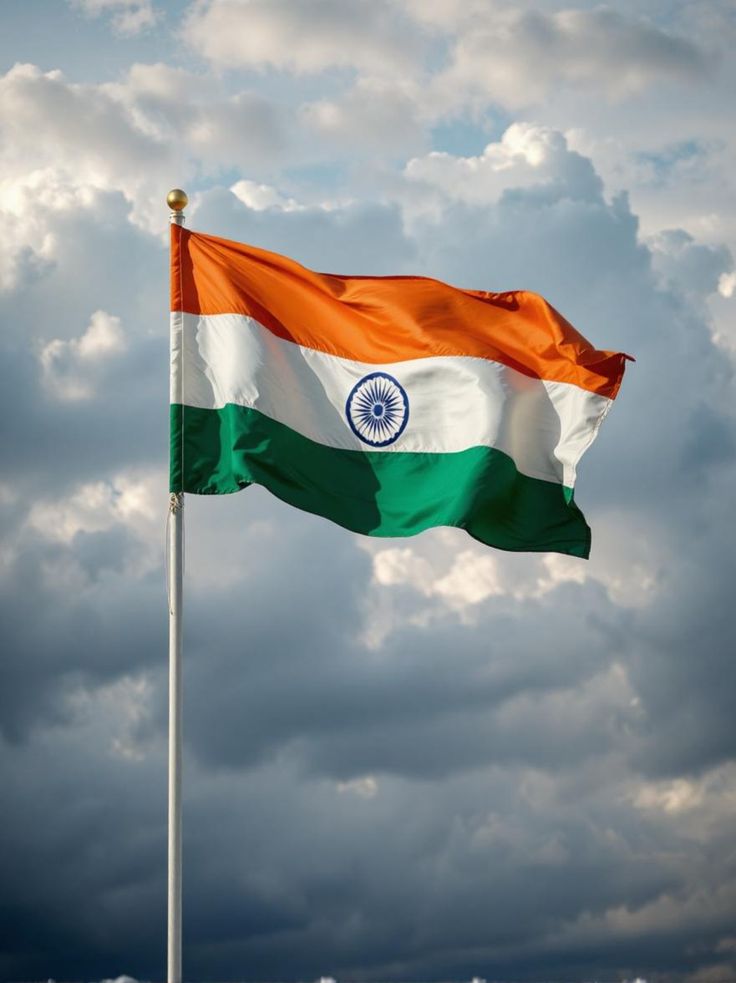
In the language of semiotics, a sign is made of two parts. The signifier is the physical form itself the cloth of saffron white and green with the Ashoka Chakra. The signified is the mental concept or meaning attached to that form. For years official campaigns such as Har Ghar Tiranga sought to fix that meaning. Under the dominant state narrative, the flag came to stand for obedience to institutions, loyalty to the government and a single authorised version of nationalism. The physical object was presented as the natural and complete expression of patriotic duty.
Derrida insisted that meanings can never be locked in place once and for all. They remain open to challenge and redefinition. In a wave of protests known as Lehra Do Tiranga young organisers and opposition groups carried the flag into restricted public spaces including Jantar Mantar. Their purpose was to contest the functioning of the Election Commission and the alleged large scale revision of electoral rolls. By placing the same cloth in a setting of open dissen, the protesters tore the signifier away from its officially approved meaning. The Tiranga no longer spoke only of loyalty to the ruling order. It began to speak of democratic rebellion against that order. The physical form stayed the same yet its conceptual load changed dramatically.
A second central move in deconstruction is the exposure of binary oppositions. Derrida showed how Western thought often rests on violent hierarchies in which one term is privileged and the other is treated as secondary or dangerous. In contemporary Indian political discourse, a sharp binary has been maintained. On the privileged side stands the nationalist or patriot defined as the citizen who supports the state without reservation. On the subjugated side stands the anti-national or anarchist defined as anyone who questions official decisions. This hierarchy has structured public debate for years.
The mass marches that featured the national flag collapse the binary. When protesters demand the resignation of senior election officials while holding the Tiranga, they create a paradox that the dominant narrative cannot easily absorb. The state finds itself forced into a contradictory position. It must restrict or disperse crowds that are displaying the very symbol it has spent years elevating. The dissident now appears dressed as the patriot. The hierarchy loses its clean edges because the excluded term has appropriated the privileged sign.
Derrida’s notion of différance further illuminates the situation. The term plays on the French words for to differ and to defer. It suggests that meaning is never fully present in any single moment. Meaning is always postponed and defined by what it is not. The official presentation of the Tiranga offers the flag as the mark of a complete harmonious and realised nation. The protesters use the same flag to point toward the absence of that fuller actualization. By waving it while protesting the reported deletion of tens of millions of names from electoral rolls they turn the symbol of the nation into a reminder of deferred justice. The ideal promise of equal citizenship remains postponed for large numbers of people. The flag therefore does not deliver a finished meaning. It continuously refers to what is still missing.
The practical response of the authorities produces what Derrida called an aporia, an impasse in which a system’s own logic traps it. To maintain public order security forces locked down central parks and other open spaces in the capital. Yet the crowds being stopped were carrying the national flag. The visual result is that the state appears to ban the display of its own supreme national emblem. Opposition voices can then ask a simple deconstructive question. Since when did the act of waving the Tiranga become a punishable offence? The machinery of authority is caught in a logical bind. Enforcing order requires the suppression of the symbol that the same authority has declared sacred.
Taken together these moves show that the Tiranga is not a static object carrying one permanent meaning. It is a site of discursive struggle. By adopting the flag, the protesters have laid bare the internal tensions within state sponsored nationalism. A symbol once used to demand political conformity has been turned into an instrument of political disruption. The meaning of the flag is no longer monopolised. It circulates between competing claims and reveals the fragility of any attempt to fix national identity once and for all. Here , we have to note. Deconstruction does not deconstruct the flag, it only indicates that itd meaning keeps shifting.
This deconstructive lens does not claim that one side is purely right and the other purely wrong. It simply demonstrates that symbols which appear solid are in fact mobile. They can be detached from their official definitions and reattached to new demands. In the present controversy the Tiranga has become the clearest illustration of that mobility. What was presented as an instrument of compliance, now functions as a vehicle of challenge. The contradictions that surface when the state confronts its own emblem are not accidental. They are the inevitable result of treating a complex social sign as if it possessed a single unchanging essence.
The political crisis therefore offers more than a contest over electoral procedures. It offers a living demonstration of how meaning is produced, contested and deferred. The national flag continues to fly yet the concepts it is asked to carry keep shifting. In that continuous movement the work of deconstruction finds its clearest contemporary expression.