On July 20, 2026, the streets of Delhi near the seat of power became the stage for a decisive confrontation. Students affiliated with the Cockroach Janta Party (CJP) organized a march to protest rampant irregularities in competitive examinations, particularly the NEET paper leaks, along with broader shortcomings in India’s education framework. What started as a call for accountability soon escalated into physical clashes with security personnel. Lathi charges, tear gas deployment, stone throwing, and widespread detentions left both young protesters and police officers injured. The episode quickly earned the label of a “black day” in public memory viewed by critics as an assault on youthful dreams and by authorities as an inevitable consequence of maintaining order amid sensitive parliamentary sessions.
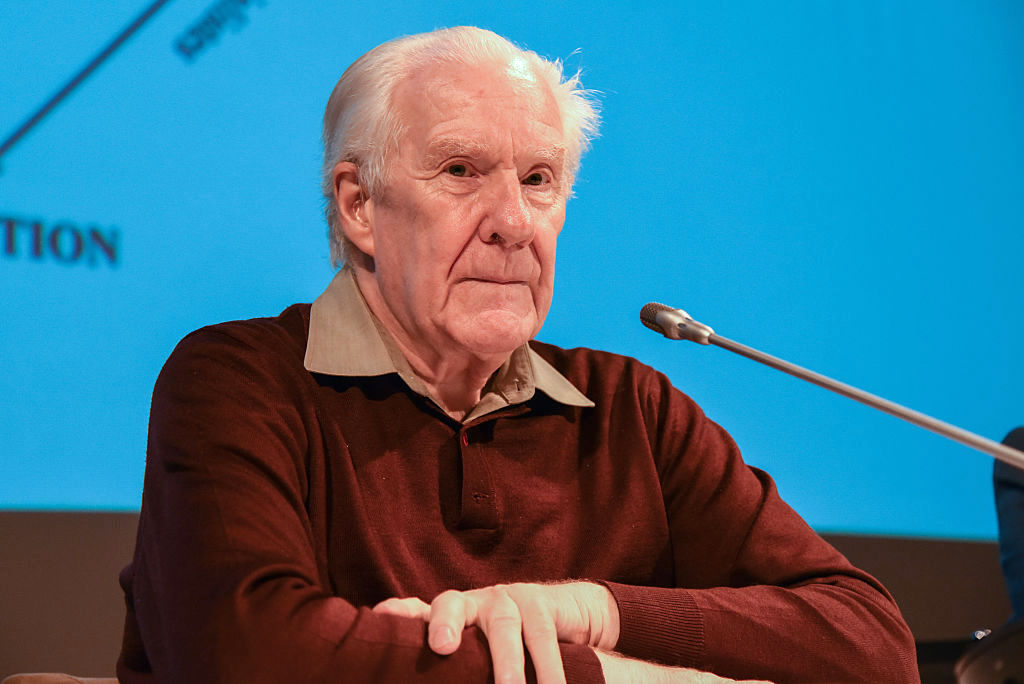
Alain Badiou, the influential French philosopher, provides a profound lens through which to interpret this moment. Central to Badiou’s thought is the concept of the Event, a sudden, unpredictable rupture within an existing situation that cannot be fully explained or contained by the rules of that situation. Unlike ordinary occurrences, an Event introduces something genuinely new by revealing the inconsistencies and exclusions hidden beneath the surface. The Delhi student protests of July 20 embody such an Event. They disrupted the normalized functioning of education and politics, forcing into visibility what had long been overlooked: the profound discontent of millions of young Indians whose futures are jeopardized by systemic failures.
In Badiou’s ontology, rooted in mathematical set theory, every “situation” is structured by a counting operation . What he calls the “count-as-one.” This structure decides what elements belong and what remains uncounted or invisible. Applied to the Indian educational context, the prevailing situation counts students primarily as competitors in a high-stakes examination game, as raw material for economic growth for education ‘mafia’, or as statistics in reports on national development. The human realities that manifest are the crushed aspirations, the suicides driven by pressure, the exploitation by commercial coaching empires, and the erosion of trust in merit exist as a void within this counting. They are present but not acknowledged as legitimate parts of the situation. The student march shattered this illusion. By converging on Parliament and refusing to disperse despite forceful resistance, the protesters declared that this void could no longer be ignored. Their action named (counted) the inconsistency: a system claiming to nurture talent while systematically betraying it.
This declaration marks the emergence of subjects. For Badiou, subjects are not pre-existing individuals but entities created through fidelity to an Event. They commit themselves to the consequences of the truth that the Event makes possible. The students of July 20 have undergone this transformation. No longer mere objects of educational policy or passive victims of leaks and inefficiencies, they have asserted themselves as active subjects of truth. Their demands extend beyond immediate fixes like ministerial resignations. They appear to challenge the very foundations of an examination-centric culture that prioritizes rote learning over creativity, competition over collaboration, and exclusion over inclusion. In facing batons and uncertainty, these young people embodied the courage required to affirm that another form of education one aligned with genuine human potential is both necessary and possible.
Fidelity, in Badiou’s framework, is an ongoing process rather than a one-time act. It involves continuously drawing new connections between the Event and the everyday situation, expanding the reach of the truth it inaugurates. The protests did not end with the clashes. Reports of injured students, images of chaos, and stories of detentions circulated widely, sparking further solidarity marches elsewhere in the country leading to the intensification of debates in academic circles and public forums. This persistence demonstrates the beginnings of a truth procedure. It operates against three typical reactions that Badiou identifies: the statist impulse to restore normal order through repression, the reactive denial that dismisses the Event as mere disruption, and the obscurantist temptation to envelop everything in cynicism or relativism . By continuing to press for systemic change, the students resist these temptations and keep the Event alive.
The multifaceted nature of the day further resonates with Badiou’s ideas. Each participant whether a baton-wielding officer, a stone-throwing ‘student’, a distant observer, or a media commentator possesses only a limited perspective. No single narrative exhausts the Event. Its truth lies in its infinite potential, which unfolds through collective fidelity rather than reduction to any one viewpoint. This understanding discourages simplistic binaries of heroes and villains. Instead, it calls for a deeper engagement with the underlying issues: generational divides, institutional distrust, the politicization of grievances, and the difficulties of balancing free expression with public stability during sensitive times.
Looking forward, fidelity to the July 20 Event opens several concrete pathways for renewal. First, in the domain of education, it demands a comprehensive renaissance. Imagine examination systems fortified by robust technology to prevent leaks, coupled with continuous and skill-oriented assessments that reduce destructive pressure. Coaching industries could be reined in through policies promoting accessible, high-quality public education. Students, now recognized as subjects, could participate as co-creators of curricula, integrating contemporary needs such as ethical technology use, environmental awareness, and inclusive development. Such reforms would honour merit while dismantling barriers that currently make success feel arbitrary or unattainable.
Second, the Event highlights opportunities to fortify democratic practices. Better protocols for protest management emphasizing de-escalation, dialogue, and independent review could prevent future excesses. Institutionalizing regular youth engagement forums, digital platforms for civic input, and participatory mechanisms would allow grievances to surface constructively rather than erupt on the streets. In this way, dissent becomes a strengthening force for the republic rather than a perceived threat.
Third, India’s demographic advantage multiple comes into play as enormous youth population gains new significance. Post-Event, young people could direct their energies into sustained movements: auditing educational institutions for transparency, establishing community-based skill development centers, launching tech-driven solutions for governance challenges, or fostering dialogues that bridge regional, caste, and class divides. Political parties, civil society groups, and government bodies have a responsibility to create genuine spaces for this leadership instead of marginalizing it.
Fourth, the Event calls for evolution in how society narrates itself. Responsible media practices, widespread media literacy, and platforms that amplify diverse voices can help citizens navigate the complexity of partial truths. This reduces polarization and supports nuanced collective reflection.
Naturally, significant challenges loom. Entrenched economic interests, the amplifying effects of social media, and deep-seated social fractures could hinder progress if left unaddressed. Yet India’s track record of resilience through historical upheavals offers grounds for measured hope. Moments of rupture have repeatedly catalyzed advancement when met with constructive responses.
In Badiou’s philosophy, the ultimate value of an Event is measured by the subjects it produces and the truths they help realize. The students injured or detained on July 20 carry the physical and emotional marks of this process, but they also hold the seeds of transformation. Their actions remind us that democracy thrives on active participation, not passive acceptance. The violence of that day was a symptom of deeper maladies, but the response it elicits will determine the nation’s trajectory.
As India moves ahead, the choice is clear: retreat into familiar patterns of cynicism and control, or embrace the demanding work of fidelity. By validating the truths revealed on July 20 while building bridges across differing perspectives, the country can move toward a future where education empowers rather than disempowers , where youth voices shape policy, and where protests evolve into partnerships for a more just society. In 2030 and beyond, this could manifest as a transformed nation in which aspiration is met with opportunity, and collective intelligence drives inclusive growth.
The protests of July 20 were not an endpoint but a beginning. Through the lens of Badiou, they stand as a powerful affirmation: when the young refuse to be counted as nothing, they create the conditions for everything to change. Fidelity to this Event offers India a path not of fracture, but of profound renewal. The students have spoken. Now the larger community must decide how are we to faithfully listen and act.