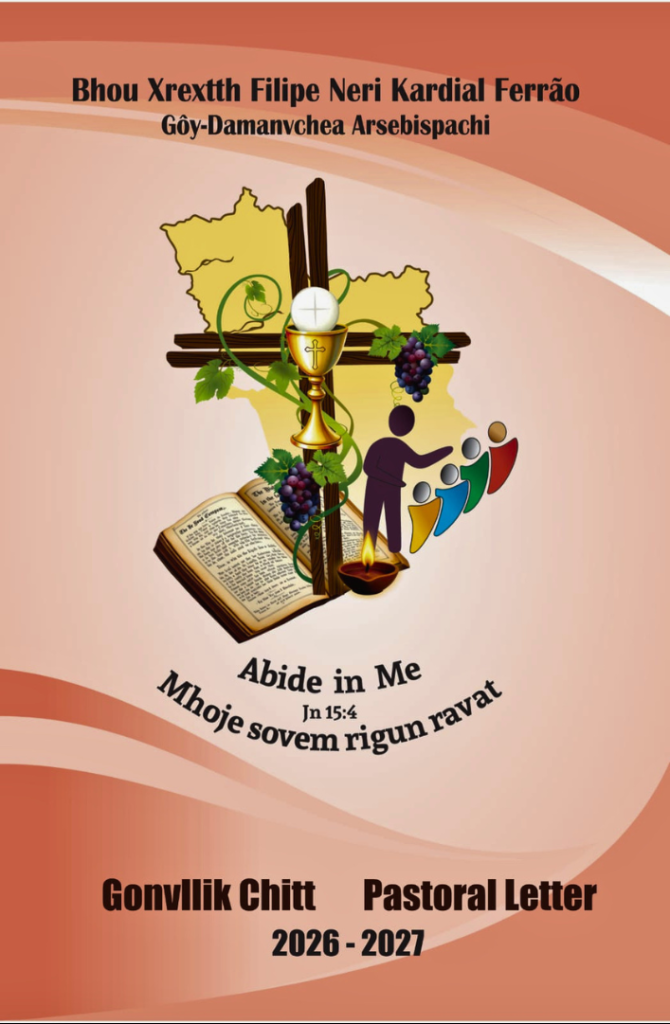
In a world marked by rapid change, digital distractions, and shifting cultural values, the Catholic Church in the Archdiocese of Goa and Daman has received a timely spiritual guide. Archbishop Filipe Neri Cardinal Ferrão has issued a pastoral letter titled “Abide in Me,” drawing directly from the words of Jesus in the Gospel of John. This document, launched to mark the beginning of the 2026–2027 pastoral year, extends a heartfelt invitation to priests, religious, lay faithful, and all people of goodwill to deepen their relationship with Christ. It emphasizes living out faith through ongoing formation, with special attention to its biblical, catechetical, and liturgical dimensions. What makes this letter particularly valuable is its practical approach, offering clear indicators for individuals, families, Small Christian Communities (SCCs), parishes, deaneries, and the diocese as a whole.
The letter opens with the powerful image of the vine and the branches from John 15:4: “Abide in me as I abide in you. Just as the branch cannot bear fruit by itself unless it abides in the vine, neither can you unless you abide in me.” Cardinal Ferrão uses this metaphor to remind believers that Christian life is not about isolated efforts or mere religious routines. Instead, it calls for a deep, sustained communion with Jesus the source of true life and fruitfulness. In the context of Goa and Daman, a region blessed with a rich Catholic heritage spanning centuries, the letter acknowledges both strengths and challenges. Urbanization, tourism, migration, family pressures, and the influence of modern consumerism can pull people away from their spiritual roots. The Cardinal warns that lives can become busy yet spiritually empty if they are not intentionally connected to Christ.
At the heart of the pastoral letter are three interconnected pillars that form the foundation for a vibrant Christian existence. First is rootedness in faith. This begins with the sacrament of Baptism, through which believers are grafted into the life of Christ and the community of the Church. The letter stresses the importance of regular engagement with Sacred Scripture. Reading and reflecting on the Bible is not reserved for clergy or scholars but is essential for every disciple. Personal prayer, meditative reading of God’s Word, and allowing Scripture to shape daily decisions help individuals remain firmly rooted amid life’s storms.
The second pillar is formation in faith. Faith is a journey of lifelong growth rather than a one-time event. The letter highlights the family as the “domestic church” and the primary school of faith. Parents have a sacred responsibility to nurture their children’s spiritual development through simple practices like bedtime prayers, sharing Bible stories, and discussing moral values around the dinner table. Grandparents, often the keepers of tradition, play a beautiful supporting role by passing on prayers, hymns, and lived experiences of God’s faithfulness. Catechists, teachers, and youth animators receive special encouragement to present Church teachings with clarity, creativity, and fidelity. Formation also extends to adults, who are urged to participate in ongoing learning opportunities to deepen their understanding of doctrine and its relevance to contemporary issues.
The third pillar focuses on the celebration of faith, centered on the liturgy. The Eucharist is described as the source and summit of Christian life, where believers encounter the living Christ most profoundly. The letter encourages active and conscious participation in Mass through singing, responsive prayer, and serving in various ministries such as lectors, altar servers, choir members, and extraordinary ministers of Holy Communion. It also promotes a deeper appreciation of the liturgical seasons. Families are invited to create Advent wreaths, set up Christmas cribs, pray the Stations of the Cross during Lent, and celebrate feasts with joy and meaning. The Diocesan Centre for Liturgy is commended for its role in supporting parishes and enhancing the quality of worship across the archdiocese.
One of the most distinctive features of Cardinal Ferrão’s letter is its emphasis on practical application. Rather than remaining at the level of inspiration, it provides concrete indicators tailored to different levels of Church life. These guidelines serve as a practical roadmap, helping communities translate the call to “abide in Christ” into everyday actions that bear visible fruit.
For individuals, the letter suggests cultivating a personal relationship with Christ through daily prayer, regular reading of the Bible, examination of conscience, and participation in the sacraments of Reconciliation and Eucharist. It encourages personal conversion, acts of charity, and a spirit of discipleship that influences work, relationships, and leisure.
At the family level, practical steps include setting aside time for family prayer, Scripture sharing, and attending Sunday Mass together. Parents are called to model Christian virtues, discuss faith matters openly with children, and create homes where God’s presence is felt. The letter recognizes the challenges faced by modern families busy schedules, technology overuse, and generational gaps and offers encouragement to prioritize spiritual bonding.
Small Christian Communities (SCCs) are seen as vital cells of the larger Church. These neighborhood groups are encouraged to meet regularly for Bible reflection, sharing of life experiences, mutual support in times of need, and collective prayer. SCCs can become places where faith is lived out in solidarity, addressing local concerns while fostering a sense of belonging and missionary outreach.
Parish communities receive guidance on strengthening liturgical celebrations, organizing formation programs for all age groups, promoting lay ministries, and building a culture of communion and service. Parishes are urged to be welcoming, inclusive, and actively involved in social outreach, ensuring that no one feels left out.
At the deanery level, the focus shifts to coordination and collaboration among parishes. Deaneries can organize joint formation events, share resources for catechesis, and plan pastoral activities that address common challenges. Finally, at the diocesan level, the letter calls for unified vision, synodal decision-making, and structures that support ongoing renewal. This includes strengthening institutions for catechesis, liturgy, and family ministry, as well as addressing broader societal issues through the lens of the Gospel.
These practical indicators make the pastoral letter a living document. They empower every member of the Church to take ownership of their faith journey while contributing to the common mission. By addressing each level specifically, Cardinal Ferrão ensures that the call to abide in Christ permeates all aspects of ecclesial life, from the intimacy of the home to the wider diocesan family.
The letter arrives at an important moment for the Archdiocese. As it looks toward future pastoral planning, this document builds on Cardinal Ferrão’s long-standing commitment to biblical formation, catechetical renewal, and liturgical vitality. His background in theology and pastoral leadership shines through in the letter’s balanced approach deeply spiritual yet realistically grounded in the realities of daily life.
Symbolism enriches the message. The official logo for the pastoral year depicts a grapevine intertwined with the Cross, emerging from an open Bible, with figures representing people of all ages engaged in formation and worship. Eucharistic elements remind readers that abiding in Christ ultimately leads to fruitful service and joyful witness.
In his reflections accompanying the launch, the Cardinal invited the faithful to move beyond superficial practice to authentic discipleship. He emphasized that abiding in Christ equips believers to be credible witnesses in a secular age offering hope, compassion, and truth to a world hungering for meaning. The letter concludes by entrusting the archdiocese to the maternal care of the Blessed Virgin Mary and the intercession of saints like St. Joseph Vaz, the apostle of Goa.
Cardinal Filipe Neri Ferrão’s pastoral letter “Abide in Me” stands as more than an official document. It is a spiritual compass guiding the Archdiocese through contemporary challenges toward deeper union with Christ. By focusing on biblical roots, continuous catechetical formation, and vibrant liturgical celebration, while providing actionable steps for every level of Church life, it offers a comprehensive vision for renewal.
As the 2026–2027 pastoral year unfolds, the fruits of this initiative will depend on how generously the faithful respond. May individuals, families, and communities take these words to heart, allowing Christ the Vine to nourish every branch. In abiding in Him, believers discover not only their true identity but also the strength to bear lasting fruits of love, joy, peace, and service for the glory of God and the building up of His Kingdom.