In the study of Goa’s past, the most illuminating path lies not in grand doctrinal narratives but in the quiet rhythms of communal practices. Before the Portuguese arrival, village life revolved around the Ganvkarias, the hereditary assemblies of founding families who governed the ganv (village) as self-sustaining worlds. These practices of land stewardship, ritual observance, dispute resolution, and resource sharing formed the episteme of pre-Portuguese Goa: a way of knowing and being rooted in embodied, collective action rather than abstract belief. Drawing on Michelle Foucault’s archaeological method, which excavates the underlying rules governing practices within different historical periods, we can discern distinct epistemes in Goan history. Each era reveals how human activity rather than professed faith shaped social reality. This approach decenters the modern obsession with “religion” as a bounded system of doctrines and exposes how contemporary identity politics rests on a profound, often invisible, shift in the very nature of belonging.
The Pre-Portuguese Episteme: Practices as the Fabric of Existence
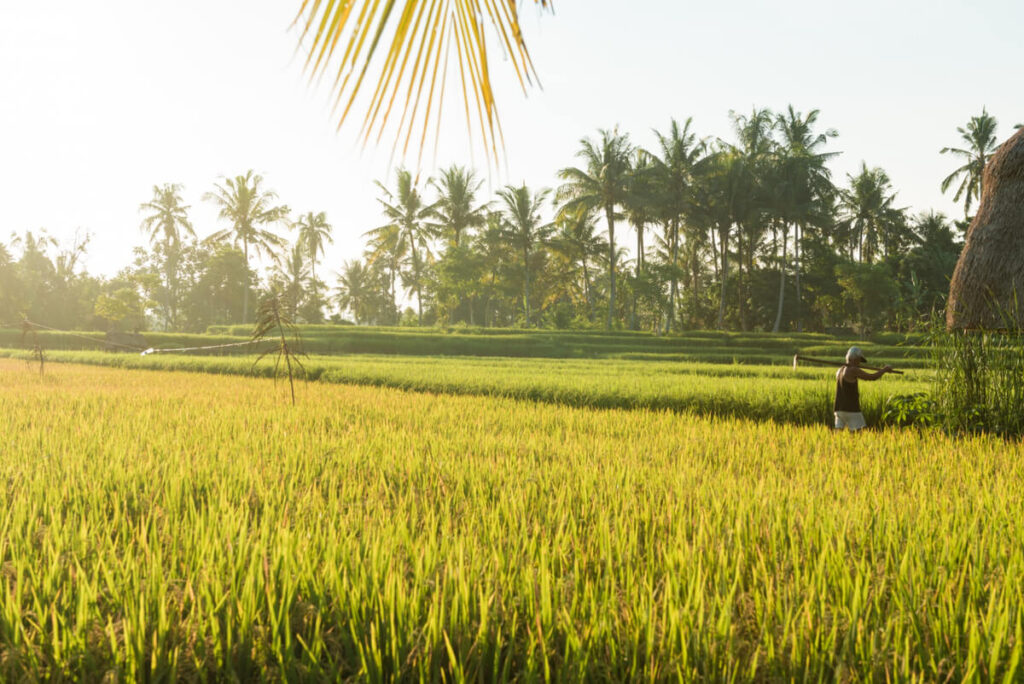
Prior to the 16th century, Goan society operated within a dharmic and shamanic worldview where “religion,” as understood today, had little meaning. Life was oriented around recurring practices, communal actions that sustained cosmic and social order. The Ganvkarias stood at the heart of this system. As private republics, these village bodies managed agricultural cycles, irrigation networks (bandharas), temple endowments, and festivals. Decisions emerged not from individual conscience but from collective deliberation among gaunkars, who embodied the ganv itself. “Hanv mhunlear ganv”—I am, therefore the village is had captured this ontology. Identity was not personal but positional, enacted through participation in shared labour, rituals, and obligations tied to caste and lineage.
Temples were not houses of doctrinal worship but living centers of practice. Deities like Shri Mangesh, Shanta Durga, or local gramadevatas received seva (service) through daily offerings, processions, and communal feasts. Mahzans trustees from Ganvkar families oversaw these activities, ensuring that spiritual efficacy flowed from correct performance rather than orthodox belief. Castes contributed specialized roles: certain communities handled specific rituals, music, or maintenance, weaving interdependence into the social tapestry. Shamanic elements such as folk healing, spirit possession, and nature reverence coexisted fluidly with Brahminical rites. There was no centralized “Hindu” authority; instead, a multiplicity of traditions adapted organically.
Foucault’s archaeology helps us see this as a distinct episteme: knowledge and power were dispersed through practices themselves. Authority derived from one’s ability to maintain harmony within the ganv balancing human needs with ecological and ancestral forces. Rulers from Kadamba to Vijayanagara eras extracted tribute but rarely disrupted these local systems. Conversion, in this context, would have been almost incomprehensible as a singular event of changing belief. Allegiance shifted through incorporation into new ritual economies or alliances, not only through creedal transformation but to an integration of old into the new. The pre-Portuguese world was practice-saturated: meaning emerged from doing, repeating, and belonging together.
The Portuguese Episteme: The Rise of Doctrine and Governed Practices
The Portuguese arrival, especially after the consolidation of power in the mid-16th century led to the , introduction of a new episteme centered on faith as orthodoxy. Christianity brought scriptures, creeds, and institutional centralized authority that prioritized correct belief (orthodoxy) over mere ritual performance. Yet, even here, practices remained central, now reframed and governed by doctrine. The primacy of doctrine legitimated all practices. The orthoxy decided orthopraxis .
Conversion was not simply a matter of inner conviction but a set of enforced and adopted practices: baptismal rites, attendance at Mass, observance of saints’ days, and abandonment of certain “idolatrous” customs. For Ganvkarias, survival often meant negotiating these demands collectively. Some village assemblies facilitated transitions, redirecting temple resources or adopting new patron saints while preserving underlying communal structures. Many new Christians retained older practices covertly domestic rituals, dietary patterns, and kinship ties creating Goan Catholicism’s distinctive syncretism. The Church, while promoting doctrine, had to accommodate local realities; missionaries learned that sustained adherence depended on embedding Christian teachings within familiar rhythms of village life.
Foucault would describe this as a reconfiguration of power-knowledge: the confessional, the catechism, and inquisitorial scrutiny made interior belief visible and subject to correction. Practices did not disappear but became regulated. Orthodox faith provided the framework; everyday actions, prayer, festivals, charity were the terrain where control and resistance played out. Temple destructions and conversions, therefore, appear less as a straightforward “war on religion” and more as a collision between two epistemes: one practice-driven and communal, the other increasingly doctrinal and individualizing. The Ganvkarias’ role complicates simplistic victim-perpetrator binaries. As custodians of village continuity, they sometimes chose adaptation to preserve the ganv under new conditions. Hidden shrines in the hinterlands and migrations to Ponda preserved older practices, showing resilience within constraint.
Over time, even within the Portuguese period, a slow reassertion of practices occurred. Local Catholicism developed its own lived expressions such as processions blending with folk traditions, family-oriented devotions that tempered doctrinal rigidity. Yet the episteme had shifted: legitimacy increasingly rested on alignment with Church teachings rather than purely on communal efficacy.
The Contemporary Episteme: Doctrine Colonizing Practice
In our postcolonial era, a third episteme dominates, one where the very category of “religion” as a doctrinal “ism” retroactively frames all history. Influenced by Western models of faith. exported through colonialism and reinforced by modern nation-states and identity politics that we now interpret the past through the lens of competing belief systems. This creates a profound distortion. Colonization is cast primarily as religious persecution: temples destroyed, faith suppressed. While undeniable suffering occurred, this narrative obscures the practice-based nature of pre-modern life and the agency of Ganvkarias.
Postcolonial scholarship and politics often essentialize “Hinduism” and “Christianity” as fixed doctrines in opposition. Yet dharmic traditions were never primarily “isms.” They were paths (margas) of practice of dharma as righteous action, cosmic duty, and relational harmony. Shamanic elements emphasized direct experience over dogma. The shift toward doctrinal understanding is modern. May be Hinduism as a unified faith with scriptures, organizations, and political assertions represents a deeper conversion. This is the real transformation: from practice-oriented belonging to ideology (ism)-driven identity.
Today, identity politics thrives on this doctrinal gaze. Village practices that once fostered pragmatic coexistence are reframed as markers of religious rivalry. Ganvkaria institutions, though diminished, persist in land disputes, temple management, and community events, but they are increasingly interpreted through communalist lenses. The emphasis on orthodoxy fuels polarization: Hindu revivalism seeks doctrinal purity, while assertions of Christian or minority identity respond in the same coin. Practices driven by shared Konkani culture, interfaith participation in festivals, syncretic cuisine become secondary to creedal allegiance. Foucault’s insight remains potent: power operates through the production of knowledge. By privileging doctrine, we render invisible the continuity of lived practices that have always sustained Goan pluralism.
This contemporary episteme risks further alienation. Younger generations encounter heritage through textbooks and politics rather than through embodied participation in ganv life. The archaeology of practices urges us to recover what was primary: the daily actions, mutual obligations, and ritual repetitions that bound people beyond faith labels. Recognizing the Ganvkarias’ legacy as stewards of a practice-based world offers a counter-narrative. It highlights how communities adapted without fully erasing older ways, producing Goa’s unique cultural palimpsest.
Towards a Practice-Centered Understanding
Excavating Goan history through practices, rather than doctrines, reveals deeper continuities and ruptures. The pre-Portuguese episteme privileged communal doing as the ground of existence. The Portuguese period introduced doctrinal governance over practices, creating hybrid forms. Our time colonizes both with a retrospective doctrinal framework that fuels division. True decolonization of knowledge might involve reclaiming practices as the locus of study and belonging, which revives attention to how people actually live, share, and sustain their worlds.
In Goa’s red earth and saline breezes, the ganv still whispers its wisdom. Festivals continue, families gather, and rituals adapt. By focusing on these enduring practices, we move beyond blame toward empathy and complexity. The Ganvkarias remind us that before faith became doctrine, it was lived relationally. Recovering this insight can temper identity politics and foster a more grounded pluralism, one rooted not in competing orthodoxies but in the shared soil of practice.
This archaeological gaze does not diminish historical pain or achievements. It enriches them. It shows how ordinary people, through their actions, navigated immense change while preserving the essence of community. In an age hungry for doctrinal certainty, Goa’s history of practices offers a gentler, more humane path: one where belonging emerges from what we do together, day by day, across changing times.