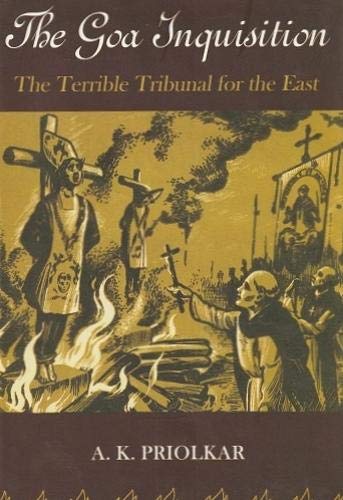
In an era when discussions about Goan history often grow deeply polarized, the sharing of A.K. Priolkar’s 1968 biographical sketch of St. Francis Xavier offers a valuable opportunity for thoughtful reflection. Priolkar, whose earlier book on the Goa Inquisition remains widely referenced, presents in this Mandovi magazine (written in Marathi ) article a portrait of the saint that is remarkably humane, balanced, and insightful. His closing thoughts, sensitively translated and shared, emphasize virtues over miracles and service over controversy. While differences exist regarding interpretations of the Inquisition, Priolkar’s presentation of Xavier’s life and character deserves sincere appreciation for its empathy and depth.
Priolkar rightly draws attention to the enduring human qualities that make Xavier a figure of inspiration: his devotion to God, compassion for the suffering, and willingness to serve the marginalized. He acknowledges the saint’s intolerance toward other religions and his militant approach as products of his turbulent times rather than personal failings alone. This contextual understanding reflects intellectual generosity. Arriving in India in 1542, Xavier dedicated himself to missionary work amid challenging circumstances. He traveled widely, cared for the sick and poor, supported the vulnerable, and sought to guide people toward moral lives. His efforts often combined spiritual outreach with practical help, earning respect through personal example. Priolkar thoughtfully notes that Xavier’s Christianization work in India flowed largely from this spirit of service, and that in Europe he might well have focused on helping the oppressed and reforming the wayward. Such an observation humanizes the saint and highlights the positive aspects of his legacy.
The essay’s comparison of beliefs surrounding Xavier’s preserved body with certain Hindu traditions of bodily ascension or disappearance through yogic power is handled with notable sensitivity. By placing these matters in perspective and stressing that true greatness lies in lived virtues like devotion, compassion, and renunciation. Priolkar elevates the discussion above sectarian lines. His conclusion resonates powerfully: the best way to honour Xavier is to lead virtuous lives and serve the downtrodden. This message carries universal appeal and remains relevant for fostering harmony in diverse societies. By focusing on ethical living rather than miracles or controversies, Priolkar offers devotees and readers alike a constructive path forward. The 1968 piece, published years after his Inquisition study, reveals a scholar capable of nuance and appreciation even when addressing complex religious histories.
Such portrayals enrich public understanding. Xavier’s extensive journeys across coastal India and beyond, his letters expressing concern for new converts, and his tireless efforts in difficult conditions demonstrate a commitment that inspired many. Priolkar succeeds in separating the man’s personal dedication from the broader forces of his age, presenting him as someone shaped by 16th-century realities yet genuinely driven by faith and care for others. This balanced appreciation stands as a strength of the article and contributes meaningfully to cross-cultural dialogue.
However, while Priolkar’s depiction of St. Francis Xavier merits praise for its restraint and focus on positive virtues, his influential work on the Goa Inquisition has sometimes been invoked in ways that call for careful reconsideration. That volume drew upon available accounts and secondary sources to document painful episodes in colonial religious policy. It served an important role in highlighting suffering that earlier narratives may have overlooked. Yet when treated as definitive proof of unrelenting horror or systematic atrocity, it risks oversimplifying a multifaceted chapter in history. A fuller, more contextual examination can acknowledge real hardships while providing important qualifications.
The Inquisition in Goa, formally established in 1560, functioned as an extension of Portuguese ecclesiastical authority, primarily addressing matters of faith among Christians, including recent converts. Its proceedings involved thousands of cases over more than two centuries. While these processes caused significant distress through interrogations, periods of imprisonment, social stigma, and restrictions on traditional practices,The scale and nature of outcomes deserve precise understanding. Many cases resulted in penances, spiritual reconciliation, or lesser penalties rather than capital punishment. The institution reflected the religious anxieties and consolidation efforts of a colonial power operating in a pluralistic society.
Undoubtedly, the broader Portuguese policies of that period brought disruption. Temple destructions, pressures toward conversion, limitations on non-Christian worship, and family divisions created deep wounds in Goan society. Many residents migrated to neighbouring regions to preserve their way of life. Coercive elements coexisted with voluntary conversions, as some communities found appeal in the new faith or saw social advantages. Fear of denunciation and cultural erosion affected daily life. These realities caused genuine suffering and deserve honest acknowledgment as part of Goa’s complex past.
At the same time, the 16th and 17th centuries were marked by intense religious conflicts worldwide. European powers, including Portugal, navigated threats from rival empires and internal divisions. Inquisitorial methods, though harsh by modern standards, followed procedures common in many parts of Europe at the time. Xavier himself supported stronger measures to stabilize the faith of new Christians (the Jews and the Muslims), viewing them as protective in a diverse environments, a perspective rooted in his era’s worldview. The Inquisition evolved over time and was eventually abolished in the early 19th century amid changing ideas and imperial priorities.
Goan society today reflects remarkable resilience. Christian, Hindu, and other communities coexist, sharing a vibrant Konkani culture and common heritage. Many Goan Christian families trace their roots to conversions of that period and have contributed richly to the region’s arts, literature, education, and public life. Recognizing both the painful costs of historical policies and the enduring strengths of Goan composite identity allows for a more integrated understanding.
Engaging critically with Priolkar’s Inquisition narrative does not diminish the validity of documented suffering or seek to romanticize colonialism. Rather, it aims for historical balance grounded in the full range of available evidence. Exaggerated portrayals can unintentionally deepen divisions in contemporary Goa, where people of different faiths live together and shape a shared future. True progress lies in honest reckoning with the past—mourning losses, respecting differing memories, and building upon common values.
Priolkar’s Xavier essay itself models this wiser approach. By emphasizing service to the oppressed, personal virtue, and contextual understanding over polemic, it offers a constructive example. His call to honor the saint through ethical living and compassion transcends religious boundaries. In the same spirit, discussions of Goan history benefit from empathy, rigor, and a willingness to see multiple dimensions.
As Goa and India continue navigating questions of identity and heritage, voices that highlight shared humanity become especially important. Appreciating figures like St. Francis Xavier for their dedication and care, while thoughtfully examining institutional histories, supports reconciliation rather than resentment. Priolkar’s reflective piece on Xavier remains a worthwhile contribution in this regard, reminding readers that history’s greatest lessons often emerge not from condemnation alone, but from understanding the complexities of human endeavor across time.
Ultimately, the path ahead involves carrying forward the best of all traditions: service, compassion, and mutual respect. By engaging Priolkar’s work with both appreciation for its strengths and openness to broader perspectives on the Inquisition, we honour the spirit of inquiry and humanity that his own writings on Xavier so clearly display.