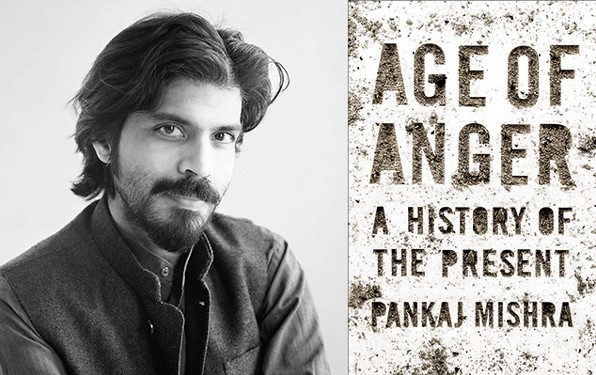
In recent years, Goa has witnessed a quiet but persistent shift in public mood. Conversations in markets, tea stalls, village clubs, and social media often circle back to one theme: a feeling of being hurt, overlooked, or disrespected. Different communities speak of past wrongs, cultural erosion, economic anxieties, and a fear that their identity is slipping away. The language of “sentiment” and “offence” has become part of daily politics and personal life. This is not unique to Goa. It reflects a global mood that writer Pankaj Mishra explores in his book , The Age of Anger: A History of the Present. His lens helps us understand Goa’s moment without blaming any single group, and without denying anyone’s pain.
1. Mishra’s Core Idea: Modernity’s Broken Promise
Mishra argues that the last two centuries promised everyone dignity, equality, and progress. The French Revolution, industrial capitalism, and later globalization told people: You can be free, rich, and respected.But for many, that promise arrived unevenly.
A new world of markets, merit, and media created winners, but also many who felt left behind, humiliated, or invisible. When people cannot match the ideals of success they see around them, the result is not always quiet acceptance. Often it is ressentiment a French word Mishra borrows. It means a mix of envy, wounded pride, and moral anger. It is not simple rage. It is the anger of those who feel denied the respect they were told they deserve.
This anger does not always target the powerful. It looks sideways. Communities begin to compare injuries. _You were hurt, but we were hurt more. Your story is heard, ours is ignored. Mishra shows how this has shaped politics from 19th-century Europe to today’s global conflicts. The competition for victimhood becomes a way to claim moral standing in a world where traditional status has eroded.
2. Goa’s Version: Many Histories, One Present Anxiety
Goa carries several histories in one small space. There is the pre-Portuguese history, the 451 years of Portuguese rule, the Liberation of 1961, and then integration into India’s economy and democracy. Each phase created memories of pride and pain.
Today, several streams of concern run parallel:
1. Cultural Change: Rapid tourism, migration from other states, and new construction have altered villages and towns. Many Goans feel their language, architecture, and slower way of life are under strain. The question “Will Goa remain Goan?” is asked with real worry.
2. Historical Memory: Debates over the Inquisition, conversions, temple destruction, and colonial rule are not only academic. For some families, they are inherited memories that still shape identity. When these histories are discussed publicly, words can reopen old wounds.
3. Economic Displacement: Land prices have risen. Traditional jobs in fishing, farming, and toddy-tapping compete with new industries. Youth migrate for work. Those who remain sometimes feel they are strangers in their own land.
4. Political Representation: Every community wonders whether its voice is heard in decision-making. When policies on land, language, or jobs are announced, the first question is often, “Who benefits, and who is left out?”
None of these concerns are imaginary. Each comes from real experience. But Mishra’s insight helps us see a pattern: as global culture tells everyone they should be mobile, successful, and seen, the gap between that image and local reality can produce a deep sense of slight. And slight, when shared, becomes collective sentiment.
3. The Trading of Hurt: How Sentiment Becomes Currency
In Goa today, we see what Mishra describes as the “democratization of anger.” Social media, news cycles, and public meetings give everyone a microphone. A statement, a policy, a textbook line, or even a meme can be read as disrespect. The response is often immediate: Our sentiments are hurt.
This is not false. Feelings are real. But when hurt becomes the main way to enter public life, three things happen:
1. Competition Sets In: If one group’s hurt is recognized, another may feel it must voice a greater hurt to be noticed. So grievances multiply. The past is scanned for injuries that can be brought to the present.
2. Dialogue Narrows: Complex problems of jobs, ecology, and governance get reduced to “who offended whom.” The space for practical solutions shrinks, because the moral stakes of “defending sentiment” seem higher than compromise.
3. Solidarity Fractures: Goa’s strength has long been the susegad coexistence of different faiths, castes, and migrant groups. When each group curates its own history of pain, the shared story of Goan-ness weakens. Neighbors begin to see each other as representatives of historical wrongs rather than as persons.
Mishra reminds us this is not because people are irrational. It is because modern life tells us our identity should bring recognition, and when it does not, the self feels under attack.
4. Beyond Ressentiment: A Way Forward for Goa
Mishra does not end with despair. He calls for honesty about how modernity creates humiliation, and for politics that addresses material life jobs, dignity of work, ecological balance not only symbols. For Goa, this suggests a gentle shift:
1. From Competition to Conversation: Can we acknowledge multiple hurts without ranking them? A fisherman’s worry about coastal erosion and a student’s worry about language policy are both real. They do not cancel each other. The metaxu the “between” space is where a Goan future can be built.
2. From Symbols to Substance: Sentiments often flare around statues, names, or textbooks. These matter. Yet the deepest respect comes from secure livelihoods, clean water, working buses, and courts that listen. If the material base is cared for, symbolic debates lose some of their sting.
3. Remembering the Whole Story: Goa’s history is not one wound but many threads Hindu and Christian and Muslim, tribal and migrant, colonial and post-colonial. Healing does not mean forgetting pain, but refusing to be defined only by it. As Mishra shows, the 18th- and 19th-century European thinkers he studies were trapped when they defined themselves only against others.
4. Reclaiming Susegad as Ethical, Not Passive: Susegad is often misread as laziness. At its best, it is contentment without apathy a refusal to join the global race for endless agitation. Goa can model a different modernity: one where economic life is vibrant, but dignity is not measured only by comparison and display.
5. Conclusion: Dignity Without Comparison
The “age of anger” is not a fate. It is a condition created by promises and gaps. Goa feels it sharply because Goa is small, connected, and historically layered. Every change is intimate.
The way out is not to deny hurt. It is to prevent hurt from becoming the only coin we trade. Mishra’s book, written about the world, ends up holding a mirror to our village. It says: The desire for respect is human. But when respect is sought mainly through proving injury, everyone ends up poorer.
Goa has always lived between worlds East and West, old and new, land and sea. That “between” can be a place of friction, or it can be a place of meeting. The choice is ours, daily, in how we speak of our neighbor’s pain and our own.
If we can hold both truth and kindness acknowledge wounds without worshipping them, and build livelihoods without losing stories then Goa can offer something rare to this angry age: an example of dignity that does not need an enemy. And that, perhaps, is the deepest healing of sentiment.