Life is never a smooth sail. The circle of life is always interrupted and disrupted. The directionality of life is often interrupted and life often appears to be going in circles as its forward thrust gets diverted or deflected. But why do we naturalize the linearity of life? Why do we assume life has to go in a straight line? Life does not have zero point starting point. We enter life in the middle of things. We land into life that is sedimented with histories, memories, theologies, ecologies , sociologies, economies, teleologies etc. Life, therefore, is inscribed with its own weight whose pulsations leads its spirals. This is why we might say that life is not merely moving towards death its ultimate crowning moment but death itself is inscribed within life itself. Death, therefore, is living in life. Life, therefore, is dynamic. It is not fully worked out. It has to work its way. As it lives, life makes its way. Both contamination and proliferation is profoundly written within life. Life, thus , is always hope-filled as there is otherness or alterity embedded within it. Although there are often repetitions and going in circles, life springs forth novelty that opens it to what we may call other than itself. It is this presence of other than itself that is what makes life itself liveable .
In a very real way, life is an infinite set. Life binds everything together but is irrevocably bound to an interrupting impulse. Life, thus, is hesitatingly living. There is an aporia or impasse within life. life does not live in the said. It lives in the saying. In fact, the said and the sayable as well as the unsaid and unsayable are living in the saying of life. this is why we may think that life is tied to a hauntology. It is haunting itself. The becoming dynamism of life keeps it always in the coming. Life is never in the arrived mode. There is always more life to come. Even at the moment of death, the point of impossibility of life is flooded with possibilities. The impossible is living in life opening several possibilities at any moment that we may for our purpose of reflection isolate and examine. Impossibilities or endings are not dead ends but are opening life towards other ends. This is why life may be viewed as interruption in play . The very play is withdrawn or is a hesitating play. It is never full-blown play. The play of life is inscribed with undecideability which leaves it (un)closed.
This is why life is both surprising and unpredictable which of course lead us to mark it with stability and fixity. Living with the flow of life and aligning to its intensities is not easy. We like to impose our destinies and expectations on its flow. To some extent, we fatalise life by choosing to close its possibilities and limit it to our comforts. Living with the attitude of ‘letting be’ becomes next to impossible for us. Life is not fatalistic. But we wish that it has a fixed destiny . We fatalize life to render it mimetic. We wish life to imitate our imagined life and our longings. Thus, we crucify and even mortify life to our lives. Letting life to be led by life itself is our challenge. This might be because we are attached to the logocentric way of thinking which puts us in an oppositional modes of thinking that is married to the binary logic. This takes us to think presence as against absence, inside as against outside, soul as against body, meaning as against the sign, clear as against obscure, literal as against the figural, spirit as against the letter etc. This is perhaps why we cannot embrace or find it difficult to embrace aporetic life.
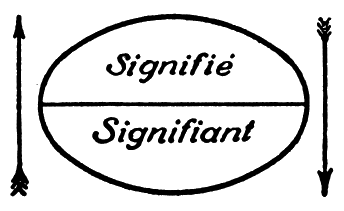
Life to some extent is unhomed and is on an exile. It has to find its home but we have no mastery over it. We are, therefore, invited to repeatedly sense the multiplicity dancing in the flow of life. This flow is irreducible. We can endlessly read life but not author its fuller destiny. But humanity like God and nature is not an accidental player in the play of life. Life in all its shades and hues cannot bypass human intervention. This is why humans are profoundly ethically responsible towards life. But life remains an excess that transgresses the grip of humans. There is no master signifier to catch life in all its abundance. We cannot privilege the signifier and miss the ocean of the signiifieds. Life says the signifier is dead. It kills its dynamism. We cannot signifierize life. We can only signifiedize life ( give it meaning). Life cannot be lost in the play of the signifier. Even our signifiedization of life comes to an impasse. There is nothing outside life. it cannot be emptied into a signifier nor into signifieds. But we cannot simply allow us to immerse or drown ourselves in the flow of life. We can stay with the flow by staying consciously above the flow of life with wakeful admission that is grounded in incoherence from our point of view. Our imposition of coherence can only offer us a sip of life and life in all its abundance may remain out of our reach.
We, thus, can live only in the middle of life. Our life is lived in the metaxu of life itself. Life can only be lived metaxologically. Life is betweening with life itself. Life does not therefore, resides in the ideal signified. It is in the living that we can lose or live life. Even our dying is a living . it is the final act of living on this side of our grave. The betweening of life opens us to the cosmos , the divine and other humans. It is in this sense that life is cosmotheandric . We do not understand the cosmotheantricity simply as received potency. In its living life manifest ( phenomenologically) as cosmotheandric. Cosmotheandricity is one of the signified and not a master signifier as we may find it in Raimundo Pannikar. Embracing life without fatalizing and without laying demands of mimesis, we are embrace life for what it is. Life as life stays beyond signifierization and will always remain a mystery.