It is inevitable to be a Goan Christian without looking at tourism in the light of faith. Here is an effort made to theologize tourism in the light pure gift as thought by Derrida as well as the unconditonal, that interrupts and interpells us right into our ordinary life.
Derrida’s Principle of the Unconditional and Its Theological Resonance
At the heart of Jacques Derrida’s late philosophy lies a radical insistence on the unconditional. This is not a vague ideal but a structural demand that cuts through every human relation: hospitality, forgiveness, justice, and above all, the gift. For Derrida, the truly unconditional act refuses all calculation, all reciprocity, all conditions that would turn the act into a transaction. A gift that expects thanks, recognition, or return is no longer a gift; it has already entered the economy of exchange. The unconditional, therefore, appears as an impossible possibility one that we must nevertheless affirm and strive toward if we are to remain faithful to what is most human and most open in existence.
This principle resonates deeply with religious experience, even though Derrida himself remained wary of traditional theism. The unconditional is the event that arrives without invitation, without preparation, and without guarantee. It calls us before we can answer, disturbs our settled arrangements, and demands a response that exceeds every rule or contract. In the context of faith, this unconditional can be heard as the very voice of God not a commanding sovereign but a gentle yet insistent call that invites without coercion. The call is unconditional because it does not depend on our worthiness, our prior consent, or our ability to repay. It simply arrives, and in arriving, it opens us to something beyond ourselves.
John D. Caputo, one of the most perceptive theological readers of Derrida, translates this philosophical insight into the language of prayer and faith. For Caputo, the “call of God” is precisely this unconditional event. God does not appear as a metaphysical superpower who imposes conditions for salvation. Instead, God is the name we give to the unconditional demand that breaks into our lives and asks us to respond without reserve. Our response to God must mirror the same unconditional character: a “yes” that is given freely, without calculation of reward or fear of punishment. Caputo’s radical hermeneutics thus turns deconstruction into a theology of weakness and vulnerability. The unconditional is not power but exposure, not mastery but dispossession. In this light, the life of faith becomes a continual practice of letting go of conditions so that the gift of God can truly arrive.
The Gift in Derrida as Illustration of the Unconditional
Derrida’s meditation on the gift provides the clearest illustration of what the unconditional looks like in practice. In his analysis, a pure gift must annihilate itself the moment it is recognized as a gift. As soon as the recipient says “thank you,” the gift has entered the circle of exchange and lost its gratuitous character. The only way to safeguard the gift is to keep it secret even from the giver and the receiver so that no debt is created. This impossibility is not a counsel of despair but a call to infinite responsibility. We must give as if the gift could never be repaid, even while knowing that every actual gift falls short of this ideal.
This aporia of the gift is not foreign to Christian revelation. On the contrary, it throws into sharp relief the supreme gift that Christianity proclaims: the gift of Jesus Christ himself. Christ is not a gift among others; he is the Gift in person. He is given by the Father without prior merit on our part, and without any expectation that we could ever repay the debt. The incarnation, the cross, and the resurrection form a single, indivisible act of divine generosity that shatters every economy of exchange. Jesus does not come because we have earned him; he comes because God is love, and love gives without condition.
In receiving Christ, we are not merely passive beneficiaries. The gift of Christ immediately places us within the Paschal Mystery his passage through death into risen life. To share in the Paschal Mystery means to die to the old self that calculates, bargains, and protects its own interests, and to rise into a new existence that lives by the logic of the unconditional. Baptism plunges us into Christ’s death so that we may walk in the newness of his resurrection. The Eucharist is the repeated reception of the same Gift, not as a reward for good behavior but as the food that sustains us in unconditional living. Every time we receive the Body and Blood of Christ, we are reminded that the gift we have been given must now become the gift we give. The Paschal Mystery is therefore both received and enacted; it is the pattern according to which our entire Christian existence is to be lived.
The Supreme Gift and Our Unconditional Response
The supreme gift of Jesus Christ demands a response that is itself a gift. Our response cannot be a calculated return on investment. It must be an unconditional “yes” offered back to God in the form of love for neighbor, care for the stranger, and openness to the unexpected. This is where the theology of the gift becomes intensely practical. Because the gift we have received is unconditional, our response must also refuse conditions. We cannot say, “I will welcome the other only if the other is like me, believes like me, or behaves in ways that make me comfortable.” Such conditional hospitality would betray the very gift that makes hospitality possible in the first place.
Here the Derridean and Caputian insights converge with the deepest currents of Christian tradition. The New Testament repeatedly presents the stranger as the privileged place where Christ himself is encountered. “I was a stranger and you welcomed me” (Matthew 25:35) is not a moral exhortation among others; it is the criterion by which the authenticity of our response to the Gift will be judged. The unconditional welcome of the other is therefore not an optional extra in Christian life. It is the concrete shape that our gratitude for the Paschal Mystery must take. When we open our doors, our tables, and our hearts without reserve, we are not performing a good deed; we are returning the Gift in the only way it can be returned by becoming a gift ourselves to others.
This return of the gift is never perfect. We remain finite, fearful, and prone to calculation. Yet the impossibility of a perfect response does not excuse us from the demand. On the contrary, the impossibility keeps the response alive as a living, ever-renewed act of faith. Each time we stretch beyond our comfort zone to welcome the tourist, the migrant, the person who speaks a different language or follows a different custom, we participate once more in the Paschal Mystery. We die a little to self-interest and rise a little more fully into the life of the Gift.
Laying the Foundation for a Theology of Tourism in Goa
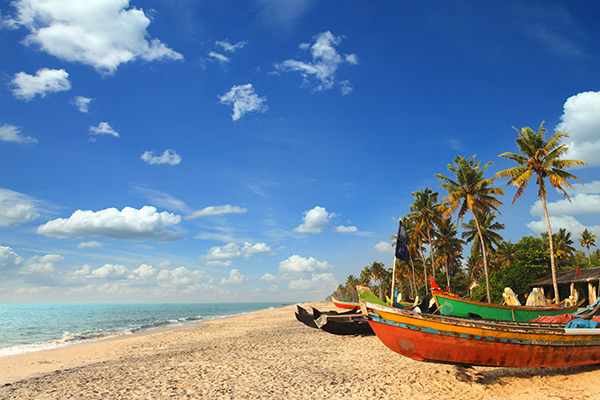
Goa, with its golden beaches, historic churches, and vibrant cultural tapestry, stands at a unique crossroads where the theology of the unconditional gift can find concrete embodiment. Tourism in Goa is not merely an economic activity; it is a privileged arena in which the drama of gift and response is daily enacted. Tourists arrive from every corner of the world some seeking relaxation, others adventure, still others spiritual renewal. They come as strangers, often carrying their own hopes, wounds, and expectations. In them, the local Christian community is invited to see the face of Christ who continues to arrive unannounced.
A theology of tourism grounded in the unconditional begins with the recognition that the tourist is not an object to be exploited for profit but a bearer of the divine call. God’s welcome is extended through us. Just as the Father gave the Son without condition, so we are called to offer hospitality without hidden price tags, without subtle expectations of conversion or cultural conformity, and without reducing the encounter to a commercial transaction. This does not mean that economic realities disappear. Goa’s tourism industry sustains countless families. Yet the theology of the gift insists that economic exchange must be placed within the larger horizon of the unconditional. Profit is legitimate only when it serves as the material condition that makes generous welcome possible, not when it becomes the ultimate measure of every interaction.
The Paschal Mystery provides the pattern for this hospitality. Tourists often come carrying their own “deaths”, the exhaustion of modern life, the fragmentation of families, the search for meaning in a secular age. To welcome them is to accompany them through a small paschal journey: to let them die to the illusion that happiness can be purchased, and to rise with them into moments of genuine encounter, beauty, and communion. The churches of Goa ancient cathedrals and humble wayside shrines
become living symbols of this mystery. When a tourist steps into the cool silence of a Goan church and feels, even for a moment, the unconditional welcome of God, the Paschal Mystery is being reenacted. The local believer who offers directions, shares a meal, or simply listens without judgment becomes the deacon of this mystery.
Moreover, our response to the unconditional in tourism cannot be separated from ethics. Because the gift we have received is absolute, our hospitality must be ethically rigorous. It must refuse every form of exploitation whether environmental degradation for the sake of more resorts, the objectification of local culture for tourist consumption, or the subtle manipulation of religious sentiment for financial gain. True hospitality protects the dignity of both guest and host. It insists on fair wages for workers, sustainable practices that honor the God-given beauty of Goa’s land and sea, and an openness that does not instrumentalize the other. Ethics, in this theology, is not an external constraint placed upon the gift; it is the gift’s own inner logic made visible. The unconditional response becomes a gift precisely because it is ethical through and through.
God’s Welcome as the Heart of Goan Tourism
In Goa’s context, the theology of the unconditional gift invites us to reimagine tourism as a form of pilgrimage both for the visitor and for the host. The tourist who arrives in Goa is on a pilgrimage, whether consciously or not, seeking rest, beauty, or transcendence. The Goan Christian who receives that tourist is also on a pilgrimage, learning ever more deeply what it means to live the Paschal Mystery in the marketplace of contemporary life. Together they enact a mutual exchange of gifts. The tourist brings stories, questions, and an outsider’s gaze that can refresh the faith of locals. The host offers the riches of Goan Christian heritage, its syncretic traditions, its legacy of Indio-Portuguese encounter, and its lived experience of hospitality rooted in the Gospel.
This mutual exchange remains grounded in the unconditional because neither side seeks to possess or control the other. The welcome extended is not a strategy for increasing footfall in churches or boosting the local economy through religious tourism. It is first and foremost a response to the God who has already welcomed us in Christ. When a fisherman’s family in a coastal village shares their meager meal with backpackers, when a hotel worker listens patiently to a distressed traveler, when a parish community organizes clean-up drives after the tourist season to restore the beaches, each of these acts participates in the return of the Gift. They become visible signs that the Paschal Mystery is not confined to Sunday liturgy but spills over into the everyday realities of tourism.
The ethical dimension ensures that this theology does not romanticize tourism. Goa faces real challenges: seasonal overcrowding, cultural commodification, ecological strain, and the temptation to reduce human dignity to service roles. The unconditional gift does not ignore these realities; it confronts them with the demand for justice. A theology of tourism that flows from the Paschal Mystery will therefore advocate for policies that protect the vulnerable, preserve the environment as God’s creation, and ensure that the benefits of tourism are shared equitably. In this way, the response to the unconditional becomes a prophetic gift to society at large.
Living the Unconditional Gift in Goa’s Present
The theology of the unconditional gift, enriched by Derrida’s philosophical rigor and Caputo’s theological creativity, offers Goa a fresh and compelling vision. Jesus Christ, the supreme Gift, has shared with us his Paschal Mystery so that we might become gifts to one another. In the context of tourism, this means that every encounter with a visitor is an opportunity to live the unconditional “yes” that God first spoke to us in Christ. Our hospitality becomes ethical precisely because it refuses to reduce the other to a customer or a project. It remains open, vulnerable, and generous, mirroring the openness of God.
As Goans and as Christians, we are called to let the theology of the unconditional shape our homes, our churches, our businesses, and our public spaces. When we welcome the tourist not as an economic unit but as a bearer of the divine call, we participate in the ongoing unfolding of the Paschal Mystery. The response we offer becomes itself a gift, imperfect, yet real; conditioned by our limitations, yet striving toward the unconditional. In this way, tourism in Goa ceases to be a secular industry and becomes a privileged sacrament of God’s welcome in our time.
The challenge before us is to live this vision daily. It requires prayerful discernment, communal reflection, and courageous action. Yet the same Gift that calls us also sustains us. The risen Christ, who gave himself without reserve on the cross and who continues to give himself in the Eucharist, walks with us in every encounter. In him, the impossible becomes possible: we can give without calculation because we have first received without merit. The theology of the unconditional gift is therefore not an abstract speculation but a living invitation, an invitation to make Goa a place where God’s welcome is experienced as real, tangible, and transformative for every traveler who sets foot on its shores.