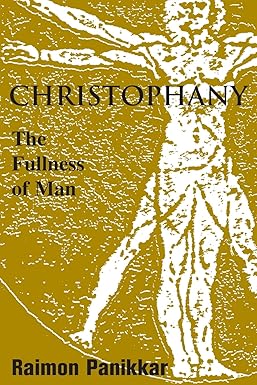
Raimon Panikkar, the profound thinker born of Indian and Spanish heritage, reshaped Christian reflection on Jesus Christ by introducing the term Christophany. In his view, this concept moves beyond traditional Christology, the systematic study of Christ’s nature and role toward a living, experiential encounter. Christophany refers to the way Christ manifests himself to human awareness, not merely as a historical figure or doctrinal truth, but as a present, transformative reality that touches the depths of existence. Panikkar described it as an invitation to experience Christ mystically, where the divine breaks into consciousness in ways that transcend cultural and religious boundaries. He emphasized a Trinitarian and cosmotheandric vision: the interplay of God, world, and humanity in harmonious unity, without fusion or separation. For Panikkar, Christ represents the fullness of human life, open to dialogue with other faiths and traditions, allowing believers to rediscover the incarnation as an ongoing pilgrimage rather than a fixed set of propositions.
This approach contrasts with classical Christology, yet it does not reject it. Instead, it seeks to enliven doctrines that might otherwise feel distant or abstract. Panikkar urged Christians to recover the primary experience of divine presence, guided by the Holy Spirit, in a world marked by religious pluralism. His work thus bridges intellectual theology with contemplative practice, making Christ accessible in diverse contexts, including those shaped by Eastern philosophies like Advaita.
The Council of Chalcedon in 451 CE established a cornerstone of orthodox belief: Jesus Christ is one person possessing two natures, fully divine and fully human united without confusion, without change, without division, and without separation. This definition protected the mystery of the incarnation against extremes that either diminished Christ’s divinity or his true humanity. While rooted in Greek philosophical terms, Chalcedon’s formula has proven remarkably adaptable, offering a framework for understanding how the eternal God enters finite human existence while preserving the integrity of both.
In Indian theology, Chalcedon sometimes faces criticism as overly Western or irrelevant to local realities like caste, pluralism, or liberation struggles. Yet its emphasis on union without confusion resonates deeply when reinterpreted through non-dual perspectives. It affirms that divine and human realities can interpenetrate without losing their distinctiveness, mirroring aspects of Indian thought where the absolute and the relative coexist in dynamic harmony. This allows Chalcedon to support a liberative vision: Christ’s dual nature models inclusive community, countering division and promoting dignity across social and religious lines.
In Goa, a region shaped by centuries of Catholic influence blended with indigenous and tropical rhythms, a distinctive image of Christ has emerged the Susegad Christ. Susegad captures Goa’s celebrated ethos of unhurried contentment, sufficiency, and joyful presence. It is not laziness or escapism; it reflects a deep trust in life’s givenness, a refusal of relentless striving, and an embrace of communal harmony amid natural beauty.
The Susegad Christ reimagines the risen Redeemer through this Goan human lens. Rather than appearing primarily as the suffering servant, the stern judge, or the ascetic teacher, he embodies explosive divine abundance. He ruptures cycles of scarcity, envy, and anxious competition, inviting people into paradise not as a distant afterlife but as a lived reality in ordinary moments: shared village life , the pause of a siesta under palm shade, the sea’s generous bounty distributed freely. This Christ redeems desire itself, transforming it from restless lack into grateful sufficiency. He stands as a gentle yet disruptive force, challenging commodified versions of susegad turned into tourist slogans, while affirming dignity, hospitality, and harmony with creation.
The resonance between Panikkar’s Christophany, Chalcedon’s definition, and the Susegad Christ is striking. Christophany provides the experiential bridge: it allows believers to encounter Christ not just in doctrine but in lived consciousness. In Goa, this encounter happens through the rhythms of susegad attitude in quiet joy, communal life , and receptive openness. Chalcedon’s “without confusion” safeguards the paradox: Christ’s full divinity erupts as abundant life, yet his full humanity dwells authentically in Goan calm, relational warmth, and earthly delight. The two natures unite in one person without erasing differences, much as divine abundance infuses human contentment without overwhelming it.
This fusion creates a Christology that is universal yet deeply inculturated. Panikkar’s cosmotheandric insight finds concrete expression: God, humanity, and cosmos interweave in the Susegad Christ’s presence. The explosive abundance echoes Christ’s divine nature, while the serene, unhurried joy reflects his human solidarity with Goan life. Together, they counter modern pressures, global hustle, ecological strain, social rivalry by proposing rest as resistance and sufficiency as liberation.
In this vision, Goa becomes more than a cultural curiosity; it offers a kairos, a moment of grace for contemporary faith. The Susegad Christ invites believers everywhere to rediscover incarnation as pilgrimage: fully divine gift received in fully human repose. Panikkar’s Christophany opens the door to such experience, Chalcedon anchors it in orthodoxy, and Goa’s lived theology gives it flesh. Here, the mystery of Christ sings in the language of calm waves, shared laughter, and trusting pause, revealing that true abundance arrives not through conquest but through surrendered joy.