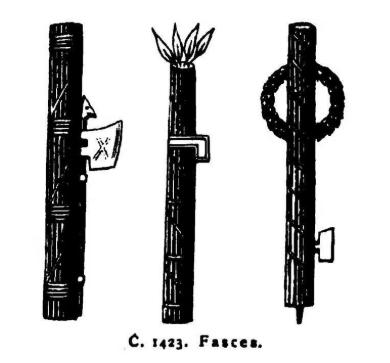
Thought fascism describes the deliberate attempt by individuals, groups or institutions to police the contents of the human mind. It seeks not merely to regulate actions or speech, but to shape the very process of thinking itself. Those who practice it believe that certain ideas must never form, certain questions must never arise, and certain conclusions must never be reached. Their goal is uniformity of thought under the banner of safety, progress or moral purity.
At its core, thought fascism rests on the conviction that the mind is a dangerous instrument when left free. Free minds produce disagreement, doubt and innovation. These outcomes threaten systems that depend on shared orthodoxy. Therefore, the practitioners of thought fascism work to install internal censors. They teach people to monitor their own reflections for signs of impurity. They reward conformity and punish curiosity that strays beyond approved boundaries.
This form of control operates through language first. Words are redefined so that once-neutral terms acquire moral weight. Certain phrases become poison, while others become mandatory signals of allegiance. Once language is captured, the range of thinkable thoughts narrows. A person who cannot find words for an idea soon finds the idea itself difficult to sustain. The vocabulary of permitted discourse becomes a cage for the intellect.
Social pressure amplifies the effect. Public shaming, ostracism and professional consequences follow any deviation. The fear of social death teaches people to pre-edit their private thoughts. What begins as caution in conversation migrates inward, until individuals police themselves more thoroughly than any external authority could. The result is a population that appears to consent, yet has abandoned genuine reflection.
Institutions play a central role. Schools, workplaces, media organizations and cultural bodies adopt codes that define acceptable inquiry. Research that challenges prevailing assumptions faces barriers to funding and publication. Teaching materials present contested claims as settled fact, while alternative perspectives receive caricature or silence. Students learn not how to weigh evidence, but how to reproduce expected conclusions. Over time, the capacity for independent judgment atrophies.
Technology accelerates the process. Algorithms that curate information create feedback loops reinforcing existing beliefs while filtering out challenge. Platforms that claim to combat harmful content often expand the definition of harm until it includes mere disagreement. The architecture of digital life rewards emotional intensity over careful reasoning and group solidarity over individual scrutiny. People come to inhabit informational environments designed to produce predictable mental outcomes.
The historical pattern is familiar even when the rhetoric changes. Every era that has sought total control of society has recognized the necessity of controlling thought. Official doctrines replace open investigation. Heresy becomes a crime of the mind rather than of the deed. Recantation and self-criticism serve as public rituals of submission. The claim is always that such measures protect the vulnerable or advance a higher good. The actual effect is the impoverishment of the collective capacity to adapt and to discover.
Thought fascism thrives on the confusion between disagreement and danger. It treats the existence of opposing views as evidence of malice rather than of complexity. It equates emotional discomfort with existential threat. In doing so, it converts ordinary human friction into a justification for expansive authority over the inner life. The demand is not merely that people refrain from certain acts, but that they feel and believe in prescribed ways.
Resistance begins with the recognition that the mind cannot be owned by others. Thinking is an individual act even when it draws upon shared knowledge. No committee can certify the correctness of every private reflection. The attempt to do so produces not harmony, but sterility. Societies that value progress must protect the conditions under which unexpected ideas can emerge, including ideas that offend current sensibilities.
Education offers one path of recovery. Instruction that emphasizes evidence, logic and the provisional nature of knowledge equips people to evaluate claims rather than merely absorb them. Exposure to historical examples of intellectual conformity reveals the costs of surrendering judgment. Practice in articulating unpopular positions without fear of immediate reprisal rebuilds the muscle of independent thought.
Personal habits matter as well. The deliberate seeking of contrary arguments, the habit of questioning one’s own certainties and the willingness to revise beliefs in light of better information all counteract the pressures toward mental uniformity. These practices require effort because the surrounding culture often rewards the opposite. Yet they remain available to anyone who chooses them.
The stakes are high. A culture that systematically discourages independent thought loses its ability to solve novel problems. Innovation depends on minds that notice anomalies and pursue them. Moral progress depends on the capacity to criticize existing arrangements. When those capacities are trained out of people, the society becomes brittle, rigid and ultimately vulnerable to collapse under changing conditions.
Thought fascism presents itself as compassion or enlightenment. Its language is often soft and its intentions proclaimed as noble. Yet the underlying project is authoritarian. It seeks to replace the messy process of individual reasoning with a managed consensus. In doing so, it treats adults as children who cannot be trusted with their own minds.
The alternative is not chaos. Free thought does not mean the absence of standards or the celebration of every impulse. Thought does has it unconcious. Freedom that is through here , freedom from the control of the orher. It means the recognition that standards themselves must be subject to scrutiny and that the best defense against bad ideas is better ideas rather than enforced silence. Open contest produces refinement. Closed orthodoxy produces stagnation.
Individuals retain the power to refuse participation. They can decline to perform the rituals of ideological purity. They can continue to ask forbidden questions in private and, where possible, in public. They can support institutions that still value inquiry over orthodoxy. Each such act chips away at the architecture of control.
Ultimately, the struggle against thought fascism is a struggle for the integrity of the person. The human mind is not a public utility to be regulated according to the preferences of the moment. It is the seat of agency and the source of all creative and moral possibility. To police it is to diminish the very qualities that make collective life worth sustaining.
The defense of free thought therefore requires constant vigilance, not because free thought is fragile, but because the desire to control it is perennial. Every generation rediscovers the temptation to silence the inconvenient. Every generation must relearn the reasons for resistance. The article of faith that sustains that resistance is simple: no authority external to the individual possesses legitimate title to the contents of the mind.
When people reclaim the right to think without permission, they reclaim the possibility of genuine progress. They restore the conditions under which knowledge can advance and under which moral insight can deepen. They refuse the reduction of the human person to a vessel for approved conclusions. In that refusal lies the enduring counterforce to thought fascism.
The practice of independent judgment remains the most reliable safeguard. It cannot be legislated into existence nor permanently suppressed. It survives in the quiet decision of each person to examine claims rather than merely accept them, to test ideas rather than merely echo them, and to value truth over belonging when the two conflict. That decision, repeated across many lives, forms the living barrier against those who would police thought.
In the end, the contest is not between competing sets of conclusions. It is between the open exercise of reason and the closed demand for compliance. Thought fascism bets that fear and social pressure will prove stronger than curiosity and evidence. History shows that the bet is often temporarily successful, yet ultimately self-defeating. Minds that have been trained only to conform lose the agility required for survival in a changing world.
The antidote is therefore not another orthodoxy, but the cultivation of habits that keep the intellect alive. Read widely, including sources that challenge one’s assumptions. Argue in good faith. Admit uncertainty. Revise when warranted. These ordinary disciplines accumulate into a culture resistant to mental colonization. They do not guarantee correct conclusions, but they guarantee the conditions under which correctness remains possible.
Thought fascism will continue to appear under new names and with new justifications. Its methods will adapt to new technologies and social arrangements. The response must remain constant. Protect the freedom of the individual mind. Reject the premise that thinking itself requires official permission. Insist that the only legitimate limit on thought is the limit imposed by reality and by logic, not by the preferences of those who claim to speak for the collective good.
That insistence is neither radical nor reactionary. It is the minimal condition for any society that hopes to remain capable of self-correction and growth. Without it, the future is predetermined by the present orthodoxy and the present orthodoxy is never examined. With it, the future remains open and the human capacity for discovery remains intact.