Philosophy today is often imagined as an academic discipline centered on logical arguments, abstract theories, and scholarly papers. Yet for much of Western history, it was something far more intimate and transformative: a spiritual exercise aimed at reshaping one’s entire way of being. The French philosopher Pierre Hadot (1922–2010) revived this ancient vision in his groundbreaking work, showing how philosophy once functioned as a practical art of living rather than a purely intellectual pursuit. Hadot’s insight illuminates a thread running from Socrates through the Hellenistic schools to later echoes in modern thought, including the work of Michel Foucault. Far from dry speculation, philosophy was askesis, a disciplined training of the self for wisdom, virtue, and inner freedom.
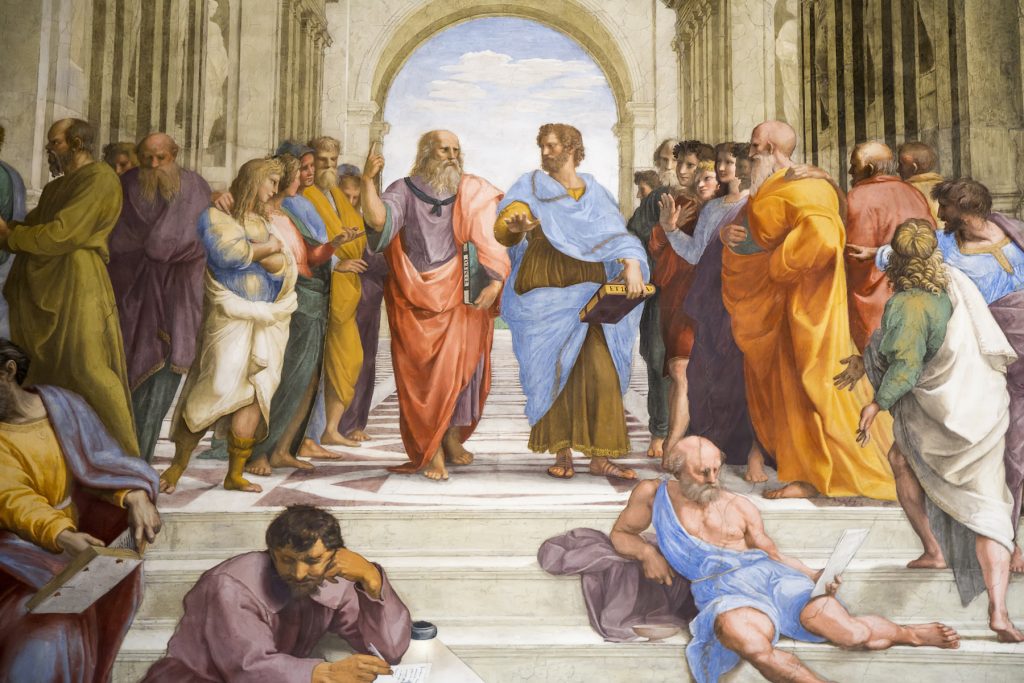
At the heart of this tradition stands Socrates, the Athenian gadfly executed in 399 BCE. For Socrates, philosophy was not a profession but a divine mission: the “care of the self” (epimeleia tēs psychēs). Through relentless dialogue in the agora, he exposed ignorance and compelled others to examine their lives. The famous Delphic injunction “Know thyself” was not mere introspection but a call to ethical transformation. Socrates practiced what he preached, living simply and facing death with equanimity. His method elenchus, or cross-examination was a spiritual exercise in humility and self-correction. By questioning assumptions about justice, courage, and the good life, interlocutors were invited to align their souls with truth. Philosophy, for Socrates, was inseparable from the examined life. Unexamined life to him l was not worth living.
Plato inherited and systematized this Socratic impulse. In dialogues like the Phaedo and Republic,philosophy appears as an ascent from the cave of illusions toward the Form of the Good. Yet Platonic philosophy demanded more than intellectual comprehension. It required purification of the soul through dialectic, contemplation, and communal living in the Academy. Students engaged in exercises of memory, moral discipline, and meditative focus on eternal realities. The goal was not simply to know virtue but to become virtuous and thus embody wisdom in daily existence. Later Neoplatonists like Plotinus intensified this contemplative dimension, viewing philosophy as a return of the soul to its divine source through progressive detachment from bodily distractions.
The Hellenistic period, following Aristotle, saw philosophy flourish as explicit spiritual exercises across rival schools. The Stoics, founded by Zeno and epitomized by Epictetus and Marcus Aurelius, developed a rigorous program of training. Central was prosochē, or constant attention to the present moment and one’s judgments. Stoic exercises included premeditation of evils (praemeditatio malorum), daily self-examination, and reframing impressions to distinguish what is “up to us” (our will and assent) from what is not (external events). Physical practices enduring cold, simple diet, and voluntary discomfort fortified the will. Marcus Aurelius’s Meditations reads like a personal spiritual journal, applying these techniques amid imperial duties. For Stoics, philosophy cured the soul’s passions, fostering apatheia (freedom from disruptive emotions) and alignment with the rational cosmos.
Epicureans pursued ataraxia, or tranquil freedom from fear, through different exercises. They cultivated gratitude, simple pleasures, and friendship while meditating on the atomistic nature of the universe to dispel anxieties about death and the gods. Their communal “Garden” embodied a therapeutic philosophy. Cynics took a more radical path, using shameless public behavior and asceticism as exercises to expose social conventions and awaken authentic living. Skeptics, meanwhile, practiced suspension of judgment (epochē) to achieve mental peace. Across these schools, Hadot emphasized, doctrines served exercises: arguments were tools for habituating the soul, not ends in themselves.
This practical orientation persisted into late antiquity and influenced early Christianity. Figures like Origen and the Desert Fathers adapted pagan askesis into Christian spiritual practices .and developed lectio divina, prayer, fasting, and examination of conscience. Monasticism institutionalized philosophy as a way of life oriented toward God. Hadot noted that while medieval Scholasticism increasingly emphasized systematic theology and logic within universities, the ancient ideal of philosophy as conversion and formation never fully disappeared.
The transition to modernity marked a profound shift. With Descartes, philosophy increasingly became a theoretical foundation for science and certainty. The Meditations retain a meditative structure, but the focus narrows to epistemological method. Enlightenment thinkers prioritized critical reason and public discourse. Kant’s philosophy, while morally rigorous, operated primarily in the realm of pure and practical reason rather than holistic soul-training. By the nineteenth and twentieth centuries, professionalization turned philosophy into an academic specialty. Existentialists like Kierkegaard and Nietzsche partially resisted this by stressing lived commitment, but the dominant image remained one of detached analysis.
Pierre Hadot’s recovery of the ancient model challenged this narrative. Drawing on extensive study of texts, he argued that ancient philosophical writings, letters, consolations, hypomnemata (personal notebooks) were not neutral treatises but spiritual exercises meant to be worked through repeatedly. Reading itself was an askesis: one internalized maxims, visualized scenarios, and progressively transformed perception. Hadot’s own life embodied this. A scholar of Plotinus and Marcus Aurelius, he viewed philosophy as a path to wonder, presence, and cosmic consciousness. In works like Philosophy as a Way of Life and What Is Ancient Philosophy?, he urged contemporaries to reclaim philosophy’s existential depth amid a fragmented modern world.
Michel Foucault, in his later years, engaged deeply with this tradition, particularly in his lectures on the “care of the self” (epimeleia heautou). Foucault’s earlier work critiqued power and knowledge regimes, but his studies of antiquity in The Hermeneutics of the Subject and The Care of the Self revealed technologies of the self: practices through which individuals constitute themselves as ethical subjects. From Socrates’ parrhesia (frank speech) to Stoic self-mastery and Cynic critique, Foucault found resources for resisting normalizing power. He saw ancient philosophy as an aesthetics of existence crafting one’s life as a work of art through disciplined freedom. While Foucault remained secular and wary of universal truths, his turn toward antiquity echoed Hadot’s emphasis on philosophy as self-transformation. Their approaches converged on viewing the self not as a given but as something cultivated through ongoing exercise.
The legacy of philosophy as spiritual exercise offers enduring relevance. In an age of distraction, anxiety, and instrumental reason, Hadot’s vision invites us to recover practices of attention, self-examination, and cosmic perspective. Stoic techniques inform modern cognitive behavioral therapy; contemplative practices appear in mindfulness movements. Yet the ancient ideal demands more than selective tools. It calls for a holistic conversion where thought, action, and character align.
Critics sometimes worry that emphasizing “spiritual exercises” risks irrationalism or religious appropriation. Hadot countered that true philosophy integrates rational discourse with lived practice; exercises enhance rather than replace critical thinking. Foucault’s genealogical approach adds caution against uncritical nostalgia, urging us to adapt ancient insights creatively to contemporary problems of freedom and subjectivity.
Ultimately, from Socrates’ defiant final words to Foucault’s explorations of self-care, philosophy as spiritual exercise reminds us that wisdom is not merely known but inhabited. It challenges us to philosophize not only in the study but in the marketplace, the quiet morning reflection, and the choices that shape a life. Pierre Hadot’s work revives this demanding yet liberating ideal: philosophy is not a spectator sport but a lifelong athleticism of the self, training us to see reality more clearly, live more virtuously, and meet existence with equanimity and awe.
In reclaiming this tradition, we confront a simple yet radical question: Are we willing to let philosophy change us? The answer determines whether philosophy remains an ornament of culture or recovers its ancient power as a path to the good life.