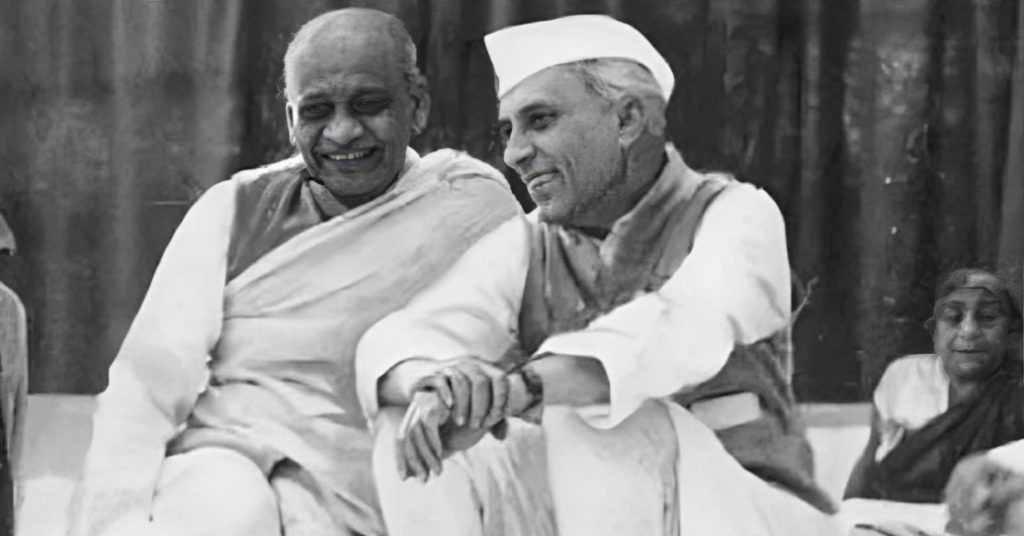
As the Narendra Modi-led government marks a significant political milestone, completing more than twelve years in continuous power and surpassing the record previously held by India’s first Prime Minister, Jawaharlal Nehru, the occasion has sparked both celebration and controversy. Supporters hail it as a testament to stability, decisive governance, and transformative policies in a noisy democracy. Yet, alongside the fanfare, a troubling trend has emerged: attempts to rewrite or conveniently downplay the early years of independent India’s leadership. Claims that Nehru only assumed the role of Prime Minister after the 1952 general elections have resurfaced, ignoring the historical reality that he held the position from the very dawn of independence. This selective forgetting not only distorts facts but also undermines the democratic continuity that such milestones should honor.
To understand the issue, one must revisit the unassailable timeline of India’s birth as a sovereign nation. On August 15, 1947, as the clock struck midnight and British rule ended, Jawaharlal Nehru became the Prime Minister of the Dominion of India. His famous “Tryst with Destiny” speech, delivered to the Constituent Assembly, was not the words of an opposition leader or a ceremonial figurehead. It was the address of the head of government, steering a newly free but fractured country through its most fragile moments. Nehru’s government operated under the framework of the Indian Independence Act, managing the executive functions of the dominion until India transitioned to a full republic.
This was no brief or interim arrangement. Nehru led the country through the horrors of Partition, which displaced millions and claimed countless lives. His administration tackled the massive refugee crisis, worked on integrating hundreds of princely states into the Indian Union, and oversaw the drafting and adoption of the Constitution. By January 26, 1950, when India became a Republic, Nehru had already been at the helm for over two years. The first general elections, conducted between late 1951 and early 1952 under universal adult suffrage, reaffirmed his leadership with a strong mandate for the Indian National Congress. Nehru was sworn in again, but this was continuity, not a beginning. Suggesting he “became” Prime Minister only in 1952 erases nearly five critical years of nation-building.
This narrative falters spectacularly when confronted with the role of Sardar Vallabhbhai Patel, one of modern India’s most revered figures. Patel served as Deputy Prime Minister and Minister of Home Affairs from 1947 until his untimely death on December 15, 1950. As the “Iron Man” of India, he masterminded the integration of princely states, often through diplomacy and, when necessary, firm action, preventing the balkanization that many feared. He also established key administrative structures, reformed the civil services, and maintained internal security during turbulent times. All of this happened under Nehru’s leadership as Prime Minister. If Nehru’s premiership supposedly started only after 1952, how does one account for Patel’s official position and contributions in the preceding years? The contradiction is glaring and self-defeating.
Veteran journalist Rajdeep Sardesai captured this inconsistency powerfully in a widely shared observation. He pointed out that cherry-picking historical facts to fit a contemporary political script inevitably leads to logical collapse. You cannot celebrate Sardar Patel’s monumental achievements in unifying the nation while pretending the governmental framework in which he operated with Nehru as the head did not exist until after the elections. Official records, parliamentary archives, contemporary newspapers, and countless historical accounts confirm Patel’s tenure as Deputy Prime Minister. Denying the early years of Nehru’s leadership retroactively diminishes Patel’s own legacy, creating an absurd historical vacuum.
The current milestone celebration centers on Prime Minister Modi’s tenure, which began on May 26, 2014. By mid-2026, this represents over a decade of unbroken leadership through multiple elections, coalition dynamics at times, and fierce opposition. In a country as vast and diverse as India, sustaining power for this long in a genuine multi-party democracy is indeed noteworthy. During this period, the government has pursued ambitious initiatives: infrastructure development on an unprecedented scale, digital public services like Aadhaar and UPI, welfare schemes reaching hundreds of millions, and a push toward self-reliance in manufacturing and defense. Economic reforms, foreign policy assertiveness, and social programs have defined this era, earning praise from supporters and scrutiny from critics.
Yet, transforming this achievement into an exercise of historical diminishment reveals a lack of confidence. Acknowledging Modi’s longevity does not necessitate erasing or questioning the contributions of those who came before. Nehru’s government, working alongside stalwarts like Patel, Dr. B.R. Ambedkar (who chaired the Drafting Committee of the Constitution), President Rajendra Prasad, and others, faced existential challenges that tested the very survival of the nation. They dealt with the aftermath of colonial rule, economic backwardness, social fragmentation, and external threats. The institutions they built parliamentary democracy, an independent judiciary, a professional bureaucracy, and a secular framework provided the bedrock upon which later governments, including the present one, have operated and innovated.
The discomfort with Nehru’s legacy among certain sections is not new. Critics rightly point to policy shortcomings during his era: the slow pace of economic growth under a socialist model, the 1962 border conflict with China, and centralizing tendencies that sometimes strained federalism. These are legitimate debates for historians and political analysts. However, rewriting timelines to suggest his premiership began later serves no scholarly purpose. It confuses public understanding, particularly among younger generations accessing information through social media echo chambers.
This pattern of selective amnesia extends beyond one leader. It risks politicizing history in ways that weaken national memory. India’s democracy has endured not because of flawless leadership but through the resilience of its institutions and the collective contributions across ideological lines. From the freedom struggle involving diverse figures likes Gandhi, Ambedkar, Bose, Patel, Nehru, and many others to the post-independence consolidation, the story is one of collaboration amid differences. Reducing it to partisan score-settling does a disservice to the republic.
Furthermore, democratic milestones should inspire reflection on evolution rather than rivalry. Modi’s government has built upon and departed from previous models in significant ways, emphasizing speed, technology, and majoritarian cultural narratives. This is the nature of competitive politics. But claiming superiority by invalidating the starting point of the democratic journey undermines the very system being celebrated. The 1947-1952 period was foundational: elections were prepared, the Constitution was implemented, and the basic architecture of governance took shape. Dismissing it creates an incomplete picture.
In an era of rapid information flow, facts matter more than ever. Reliable historical sources government gazettes, Constituent Assembly debates, autobiographies, and scholarly works leave no room for ambiguity on Nehru’s role from 1947 onward. Patel’s death in 1950, well before the 1952 polls, anchors this timeline irrefutably. Attempts to gloss over it, whether through social media memes or political rhetoric, highlight a deeper challenge: the temptation to mold the past to suit present narratives.
As celebrations continue, a more mature approach would integrate the full historical arc. Recognize the achievements of the current dispensation without airbrushing the struggles and successes of the early republic. Nehru was Prime Minister much before the 1952 elections and continued soon after, providing leadership during India’s most vulnerable years. Forgetting this does not strengthen contemporary claims; it weakens the shared democratic heritage that belongs to all Indians.
True national progress lies in learning from the complete past : its triumphs, failures, and contradictions rather than convenient fragments. In honouring milestones, let us ensure history remains a teacher, not a political tool. Only then can India build on its foundations with clarity and unity of purpose.