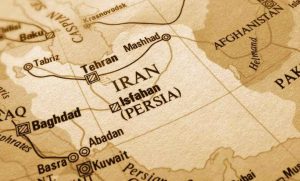
The land that stretches across the Iranian plateau has borne many names, each one a chapter in its long story of endurance, transformation, and reinvention. Today, as missiles arc across the skies of West Asia and the Islamic Republic of Iran faces an existential confrontation with Israel and the United States, the echoes of that ancient history are unmistakable. The names Persia and Iran two labels for one enduring homeland carry the weight of millennia and help explain the ideological currents driving the current conflict.
The story begins with the arrival of Indo-Iranian peoples around 1500 BCE. These Aryan-speaking tribes settled the high plateau and called their territory Airyanem Vaejah the expanse of the Aryans, or noble ones. The term Arya signified ethical nobility and cultural distinction rather than race in its original sense. Over centuries it became Ērān in Middle Persian, the proud self-designation of a people who built empires, composed sacred hymns, and developed Zoroastrianism as one of the world’s earliest monotheistic faiths.
When the Greeks encountered this civilization under the Achaemenid kings, they named it after the southwestern province of Parsa, giving rise to the Western term Persia. European orientalism later wrapped the name in layers of exoticism, portraying the East as a place of timeless splendor mixed with decline and despotism. In the 19th and early 20th centuries, colonial powers Britain and Russia especially treated the Qajar kingdom as a buffer zone and economic prize, reinforcing stereotypes of backwardness.
In 1935 Reza Shah Pahlavi took a decisive step. He instructed foreign governments to use Iran instead of Persia in official communications. The change was more than administrative; it was a deliberate rejection of colonial framing. By reclaiming the indigenous name Ērān, Reza Shah sought to affirm the country’s Aryan heritage, project modernity, and assert national sovereignty against orientalist condescension. The Pahlavi era emphasized pre-Islamic glory Cyrus, Darius, Persepolis while pursuing secular reforms, infrastructure, and Western-style education.
The 1979 Islamic Revolution inverted this narrative. Ayatollah Khomeini’s movement overthrew the monarchy and established a theocratic republic grounded in Twelver Shia Islam and revolutionary anti-imperialism. The old Persian imperial mythology, while still honored in literature, Nowruz celebrations, and cultural memory, was subordinated to an Islamic identity that viewed history through the lens of martyrdom, resistance to tyranny, and export of the revolution. Persia became largely a poetic or historical reference; Iranthe official name now carried the fundamentalist imprint of clerical rule, hostility toward the West, and uncompromising opposition to Israel.
Under this new ideological banner, Tehran constructed the Axis of Resistance: Hezbollah in Lebanon, Palestinian factions in Gaza, militias across Iraq and Syria, and the Houthis in Yemen. These groups, supported by the Islamic Revolutionary Guard Corps, served as a deterrent shield, allowing Iran to project power without direct large-scale war for decades.
The present war represents the violent convergence of these historical threads. The October 7, 2023, Hamas assault on Israel ignited a chain reaction. Israel responded with devastating force in Gaza, then turned northward against Hezbollah, systematically degrading Iran’s most capable proxy. The fall of the Assad regime in Syria in late 2025 removed another strategic buffer. Direct exchanges between Iran and Israel in 2025–2026 escalated further: Israeli and American strikes on February 28, 2026, targeted nuclear facilities, missile bases, and senior commanders, reportedly killing Supreme Leader Ali Khamenei.
Iran’s retaliation—missile salvos on Israeli cities, drone swarms, closure of the Strait of Hormuz, and attacks on U.S. positions throughout the region has turned a proxy conflict into open multi-front warfare. The once-formidable Axis now appears fractured, leaving the Islamic Republic more exposed than at any time since the Iran-Iraq War.
This moment crystallizes the tension between the two names. Persia evokes an ancient, cosmopolitan civilization that absorbed Greek, Arab, Mongol, and Turkic influences while preserving its core identity. Iran, in its current usage, embodies the post-1979 theocracy: a state that defines legitimacy through Shia eschatology, anti-Zionism, and defiance of global hegemony. Yet both names belong to the same land, one that has repeatedly reinvented itself after conquest and collapse.
The war tests whether the Islamic Republic can survive as the latest iteration of that resilient civilization or whether regime collapse, fragmentation, or another transformation lies ahead. Oil prices spike, shipping lanes choke, and proxy forces fight on despite heavy losses. The conflict forces the world to reckon with how deeply rooted identities forged in the name of Aryan nobility, reclaimed against colonial distortion, and now fused with revolutionary Islam shape the geopolitics of survival in our time.
One plateau, two names, countless rebirths. Today’s fire illuminates both the continuity and the rupture at the heart of Iran’s long story.