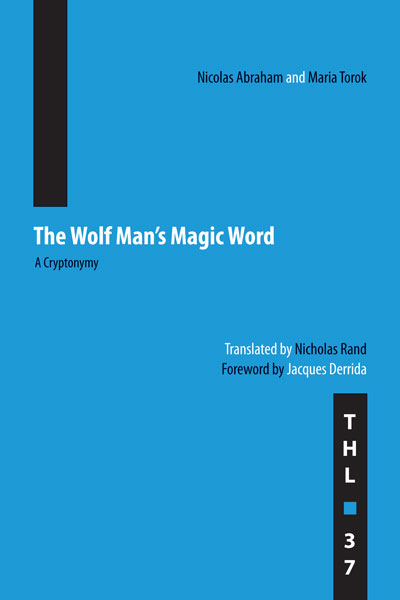
To understand the texts composed/ decomposed by the playful self of the internet, we may need the notion of anasemia of psychoanalysts Nicholas Abraham and Maria Torok. The term seme stands for the smallest unit of meaning. The prefix ana variously infers a moving back to, a moving upwards, a reversal, and return to the elemental, which cannot be broken down anymore. Thus, anasemia is a mode of problematizing the meaning of signs in an undetermined way. The anasemic program produces through other means of language like poems, fictive monologues, quasi-autobiographical forms the ‘original event’ which may have been ‘the deciphered’ poem of what takes place without taking place, without having been present, ‘of what has never been’. There is a trace of memory left by an effect that never has been. We can trace this experience to our dream.
A dream is a rebus text. It says something that is never said. It says something that will not be said by anyone else. The paradox is the one who dreams of unknowns and unknown secrets (that which is never said). It is the original event that indents the dreamer. Dreams are about unknowing, about remembering and forgetting. This means through dreams we come to possess an unknown secret and we have forgotten that we have unknown it. Reflecting on the way the secret in a dream affects us, Helene Cixous writes, ‘when choosing a text I am called: I obey the call of certain texts or I am rejected by others. The texts that call me have different voices. But they all have one voice in common, they all have, with their differences, certain music I am attuned to, and that’s the secret’. The spectral effect of the text can explain why a textshoping self gets hooked and well as hops on the web. He/she is attuned to a secret/ music/ or is drawn by a sense of debt to be paid. This is how the secret/ crypt works.
Indeed, we do not have any master key to read the cosmologies and semiologies constructed in the web by the self of the internet. The writings of the self of the internet are open, not closed, and therefore remain undecidable. Since there is no master key to open or decipher his/her texts on the web, the texts remain in the mode of arrival and are marked by indeterminacy and unpredictability. Like the self of the internet who writes his/her texts in the very act of writing, we interpret or read his/her texts in the very act of reading/ interpreting. There is no predestined deciphering of the texts composed by the self of the internet. The self of the internet is performative so also we who wish to decipher his/her texts also have to approach them in a performative mode. What we have are only interpretive readings. The texts of the self of the internet remain encrypted.
Reading the writings of the self of the internet is both immoral and indecent. We do not have to pay any debts to the internet. Hence, we are not drawn to read his/her texts. It is utter disrespect to privacy or some wrong motive that can make us find our alignment with the texts of the self of the internet and we may breach his/her right to privacy. Here I have invoked the reading/interpretation of the texts of the self of the internet only to underline the indeterminacy and performative character of the writings and consequently to declare their immoral reading/ interpreting as performative and indeterminate. This is so because of the working of the crypt. The crypt is viewed by Derrida as that which returns. Derrida teaches us that what returns is always linked with desire. It is the desire that leads the self to return to compose/ decompose the texts of the internet. This means the self of the internet is taken hold by a sense of unpaid symbolic debt which he/she attempts to satisfy by his/her monkeying on the web. This is why we may view the writing of the self on the web as crypto mimetic writing.
The crypto mimetic writing of the self of the internet is of the mode of paying a certain symbolic debt that is felt intensely. We need to understand this dynamism because today the cryptomimetic writings of the self of the internet are being attentive studied and ways of instigating him/her to invest into the composition/ decomposition on the internet are being designed by big data analytics. The understanding of the operation of the symbolic debt mechanism is required so that we can find ways and means of developing resistance to the enticing games of the big data analytic/ data corporations for business and politics. The sense of demand that the self of the internet feels can open us to the workings and manipulative trickery of data corporates. It is possible to break this contract, the sense of demand that never is in the first plays. It works like the crypt of the dream and therefore not easy to break the sense of being in a contract.
Our awareness of that sense of demand that we feel works like a crypt might enable us to say a firm known to the enticements of the data conglomerates and thus choose an emancipative textshoping in the web. Although the self of the internet encrypts its texts and as such, it is very difficult for individuals to break these encryptions, the big data corporates put the texts of the self of the internet in a collective study that matches the lines of correlations in the collective with the help of artificial intelligence and behavioral sciences. Hence they are relatively successful in cracking the code of encryptions of the writings of the self of the internet. This is why it is urgent to enable the self of the web to break the crypt of contract that never was. One is simply feeling obligated to entertain the intimations of those who use the intimate knowledge of the self of the internet when in reality the contract never really exists. This awareness can emancipate the self of the internet to reject the sense of demand of several intimations that pop up without being asked for on the web. We can indeed emancipate ourselves from the stranglehold of cryptonomy.