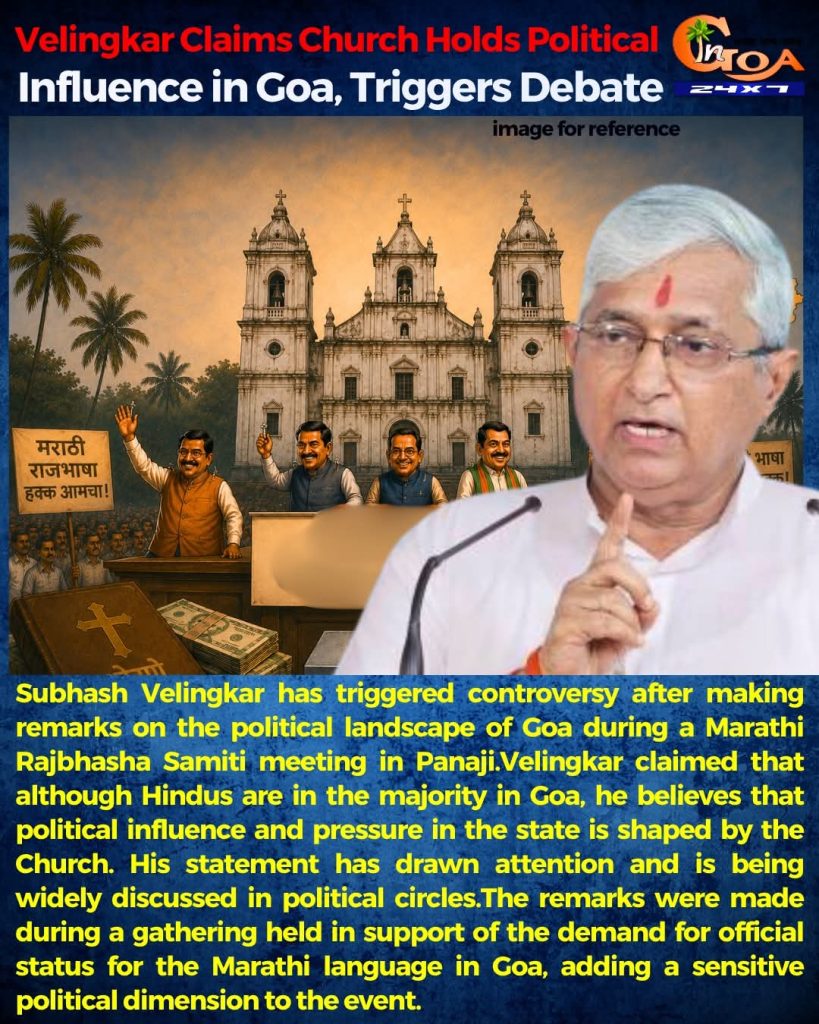
In a recent speech at a Marathi Rajbhasha Samiti meeting in Panaji, Subhash Velingkar alleged that six BJP MLAs were “recommended by the Church” and lacked alignment with the party’s ideology, yet succeeded in Hindu-majority constituencies due to external influence. These remarks, framed around language politics, risk reviving communal divisions in Goa rather than addressing genuine issues.
Velingkar’s assertion lacks concrete evidence. Indian elections are conducted under the watchful eye of the Election Commission, with secret ballots, rigorous scrutiny, and public campaigns. Candidates win through voter choice not secret church directives. Attributing victories in Hindu-majority seats to “external influence” dismisses the agency of Goan voters and implies that Hindu voters are easily manipulated, which is both condescending and factually weak as well as attack our democracy and electral process.
Goa’s political landscape has long featured cross-community alliances. The BJP, like other parties, fields candidates based on winnability, local support, caste dynamics, and development promises a pragmatic reality across Indian democracy. Many Christian leaders and voters have supported BJP governments in Goa for reasons of governance, infrastructure, and stability, just as Hindu voters have backed Congress or regional parties in the past. This reflects mature electoral politics, not a conspiracy.
Velingkar, a former RSS leader who broke away and formed the Goa Suraksha Manch, has a history of polarizing statements, particularly targeting Christian institutions and symbols like St. Francis Xavier. While concerns about cultural identity and language policy (such as Marathi’s status) deserve open debate, framing them through unsubstantiated allegations of church interference in candidate selection poisons the discourse. It shifts focus from legitimate policy disagreements like medium of instruction or official language to imagined communal cabals.
Goa’s strength lies in its syncretic culture and peaceful coexistence of communities. Accusations that undermine this harmony serve neither Hindu aspirations nor the state’s development. Voters, not shadowy recommenders, decide elections. Subhash Velingkar’s claims deserve scrutiny, not uncritical acceptance. Democratic legitimacy rests on ballots cast freely, not conspiracy theories.