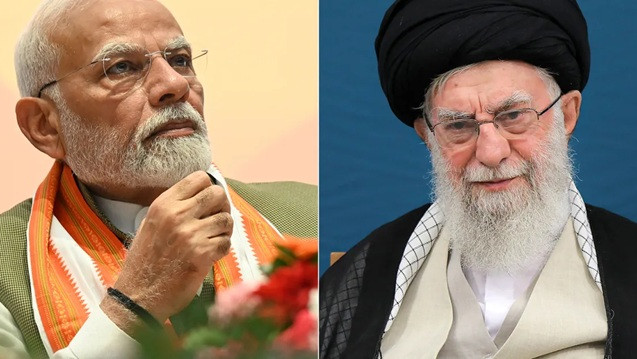
The ongoing war in West Asia has placed India in a difficult position. Joint strikes by the United States and Israel on Iran have escalated rapidly since late February 2026, resulting in the death of Iran’s Supreme Leader Ayatollah Ali Khamenei and several top military officials. Iran has responded with missile attacks on Israeli targets and Gulf countries, raising fears of a wider regional conflict. For India, this crisis threatens energy supplies, the safety of millions of its citizens working in the Gulf, trade routes, and long-standing diplomatic relationships.
India has traditionally followed a policy of strategic balance in the Middle East. It has maintained close ties with Iran for decades, especially through projects like Chabahar Port, which offers access to Afghanistan and Central Asia without relying on Pakistan. At the same time, India has built a strong partnership with Israel in defense, technology, and agriculture. Relations with the United States have also grown significantly, driven by shared concerns over China and economic cooperation. This multi-alignment approach allowed India to protect its interests without fully aligning with any single power.
Under Prime Minister Narendra Modi, however, India’s stance appears to have shifted noticeably toward Israel and the United States. In late February 2026, just days before the strikes on Iran began, Modi visited Israel. During the trip, he addressed Israel’s parliament, signed multiple agreements, and elevated bilateral ties to a special strategic partnership. The visit focused on defense cooperation, cyber security, labor mobility for Indian workers, and progress toward a free trade agreement. Many observers saw the timing as unfortunate, given the visible buildup of US and Israeli forces near Iran.
When the strikes occurred, killing Iran’s top leader and triggering retaliation, India’s official response drew sharp criticism. The Ministry of External Affairs expressed deep concern over the escalation, called for dialogue and diplomacy, and urged restraint to protect civilians. Prime Minister Modi himself described the situation as deeply worrying and emphasized the need for an early end to hostilities. In conversations with Israeli Prime Minister Benjamin Netanyahu and leaders from Gulf countries like the UAE, he highlighted risks to regional stability and Indian nationals.
Notably, India did not condemn the initial US-Israeli attacks or the targeted killing of Iran’s Supreme Leader. It avoided any statement defending Iran’s sovereignty or criticizing the strikes as violations of international law. This silence stood in contrast to India’s past positions in similar conflicts, where it often called for respect for territorial integrity and peaceful resolutions.
Opposition parties, particularly Congress, have accused the Modi government of betraying India’s traditional values and interests. Leaders like Rahul Gandhi, Jairam Ramesh, and Priyanka Gandhi have described the approach as moral cowardice. They argue that by refusing to speak out against the assassination of a head of state and by appearing to align closely with Israel and the US during the visit, India has damaged its credibility. Critics claim this tilt risks alienating Iran, endangering the Chabahar project, and exposing Indian workers in the region to greater threats. They also point to domestic unrest, including protests in cities with significant Shia populations who feel culturally connected to Iran.
Supporters of the government’s position argue that the response reflects pragmatic realism rather than surrender. In a world where the US remains a key partner for technology, investment, and countering China, outright criticism of American actions could harm India’s broader strategic goals. Strengthening ties with Israel provides advanced defense systems and intelligence cooperation that directly benefit India’s security. The government has prioritized evacuating Indian citizens from danger zones and resuming limited operations in affected areas, showing concern for national welfare.
Nevertheless, the perception persists among many analysts and opposition voices that India has quietly chosen a side. By not condemning the strikes while reaffirming solidarity with Israel shortly before the conflict erupted, the Modi administration appears to have prioritized certain alliances over the balanced neutrality that once defined Indian foreign policy. This shift may secure short-term gains in defense and economic deals, but it carries long-term risks: strained relations with Iran and parts of the Muslim world, potential disruptions to energy imports, and questions about India’s independent voice on the global stage.
As the conflict continues with ongoing strikes and retaliations, India’s ability to safeguard its citizens, maintain economic stability, and restore diplomatic equilibrium will be tested. Whether this approach ultimately advances or undermines national interests remains a matter of intense debate, but the current stance has undeniably moved India away from its historical middle ground in one of the world’s most volatile regions.